
Mark Cuban: How the Shark Tank Star Is Betting Big on Blockchain’s Future
A billionaire entrepreneur, a basketball team owner, and a Shark Tank star walks into the wild world of crypto. Sounds like the start of a blockbuster movie, right? That’s Mark Cuban for you, and his journey into cryptocurrency and blockchain is as thrilling as a Mavericks game in overtime. From his scrappy beginnings to betting big on blockchain, Cuban’s story is a masterclass in spotting the next big thing. So, grab a snack, and let’s dive into how Mark Cuban became a crypto visionary, with a few laughs along the way!
Key Points:
- Mark Cuban, a billionaire entrepreneur, owns the Dallas Mavericks and stars on Shark Tank.
- He began exploring cryptocurrency around 2017, initially skeptical but later embraced Bitcoin and Ethereum.
- Cuban believes smart contracts and decentralized apps (dApps) can transform industries, comparing blockchain to the early internet.
- His investments include OpenSea (NFTs), Zapper.Fi (DeFi), and other blockchain projects, alongside holding Bitcoin and Ethereum.
- He promotes crypto by accepting Bitcoin for Mavericks tickets and auctioning NFTs, though he warns of challenges like market manipulation.
From Selling Garbage Bags to Selling Startups
Born on July 31, 1958, in Pittsburgh, Pennsylvania, Mark Cuban grew up in a working-class family with big dreams. He was the kid selling garbage bags door-to-door to buy new sneakers—talk about hustle! After high school, he headed to Indiana University, where he earned a business degree in 1981. College wasn’t just about books for Cuban; he was already scheming up business ideas, like running a bar and teaching disco dancing. Yep, the guy’s got moves on and off the court!
That early grind paid off. Fresh out of college, Cuban didn’t waste time. In 1982, he founded MicroSolutions, a computer software company, with nothing but grit and a knack for tech. By 1990, he sold it to CompuServe for $6 million—pretty sweet for a 32-year-old! That deal was like hitting a game-winning three-pointer, setting the stage for bigger plays. Cuban wasn’t just building businesses; he was building a reputation as a guy who could spot opportunities faster than you can say “profit.”
Rise to Billionaire Status
The real magic happened in 1995 when Mark Cuban co-founded Broadcast.com, an internet radio company. This was back when the internet was like a toddler—cute but clumsy. Broadcast.com went public in 1998, and in 1999, Yahoo snapped it up for $5.7 billion in stock. Boom—billionaire status unlocked at age 41!
Around the same time, he bought the Dallas Mavericks for $285 million, turning a struggling NBA team into a championship contender. Oh, and his Shark Tank gigs? They made him a household name, dishing out tough love and big checks to startups.
When Cuban joined Shark Tank in 2011, he wasn’t just another rich guy with a checkbook. He brought real business savvy and a willingness to take risks. Over 16 seasons, he invested more than $22 million across 85 different companies—some of the biggest include Ten Thirty One Productions, BeatBox Beverages, and Rugged Maniac.By 2023, Cuban decided it was time to step away from the show. His departure after Season 16 marked the end of a major chapter, but his influence on the startup world is far from over.
Initial Crypto Skepticism
Here’s where things get really interesting. Cuban didn’t jump on the crypto train right away. Around 2017, Mark Cuban dipped his toes into the cryptocurrency pool but wasn’t exactly doing cannonballs. He was at first, worried as Bitcoin was more hype than substance. But like a good investor, he kept an open mind. By 2018, he was singing a different tune, recognizing that blockchain—the tech behind crypto—could be a game-changer. In 2018, he made headlines by accepting Bitcoin for Dallas Mavericks tickets, one of the first major sports teams to do so. It was like saying, “Sure, pay with digital gold—why not?” That move wasn’t just about tickets; it was about signaling to the world that crypto was here to stay. It’s like he went from “Nah, not for me” to “Okay, this is kinda cool.”
Embracing Blockchain
What flipped the switch? Mark Cuban saw the potential in blockchain’s ability to make transactions secure, transparent, and efficient. He started comparing it to the early internet, when nobody knew what “streaming” meant. As he started digging into the potential of decentralized finance and blockchain, he realized this wasn’t just hype—it was the future.By 2022, Cuban said that a staggering 80% of his non-Shark Tank investments were in crypto-related companies. He’s backed big players like OpenSea (the popular NFT marketplace), Zapper.Fi (for DeFi asset management), and Blocto, a platform that makes it easier for everyday users to get into crypto. His investment in Blocto’s $80 million Series A round showed just how serious he is about pushing blockchain adoption into the mainstream. Other bets include CryptoSlam for NFT tracking and SuperRare for digital art. Cuban’s not throwing darts blindfolded; he’s picking projects that scream “future.”
Living the Crypto Life—For Better or Worse
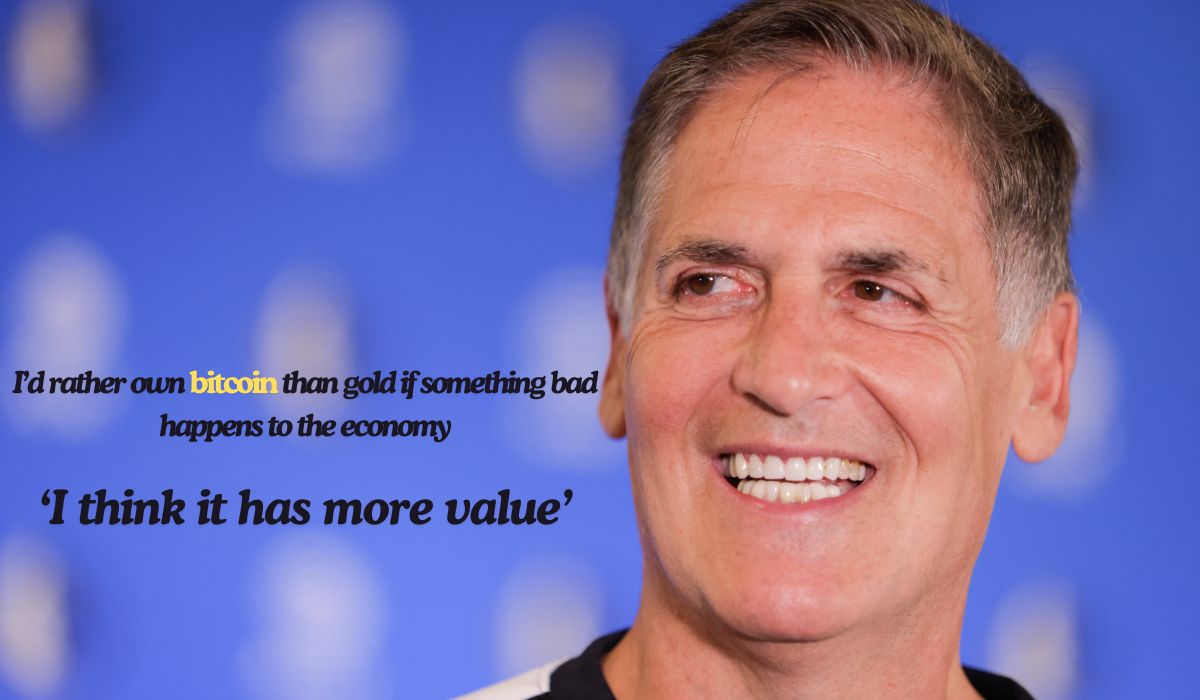
Cuban doesn’t just talk crypto—he lives it. He’s been open about his personal Ethereum wallet, which holds everything from major DeFi tokens like AAVE to smaller, riskier “shitcoins.” In 2021, he even started accepting Dogecoin for Mavericks merch and tickets, proving he’s willing to experiment.He’s also a vocal advocate for how blockchain could reshape retail investing. In a Reddit AMA, he called blockchain trading more transparent and efficient than traditional methods—something he believes could democratize finance in a big way.
Still, it hasn’t all been smooth sailing. In 2022, Cuban was named in a class-action lawsuit over his support of Voyager Digital, a crypto company that went bankrupt. Then in 2023, he lost nearly $900,000 when scammers drained his MetaMask wallet. Even for seasoned pros, the crypto world can be a minefield.
Crypto in His Businesses
Here’s where Cuban gets nerdy. He’s obsessed with smart contracts—bits of code that run automatically when conditions are met, like a vending machine that never cheats. These power decentralized apps (dApps), which can do everything from lending money to selling art without middlemen. Mark Cuban says smart contracts are like the internet’s dial-up phase: clunky now, but they’ll change the world. He’s so into Ethereum’s smart contract capabilities that he’s called himself an “Ethereum maxi.”
Mark Cuban Says He Is An #ethereum Maxi, But Not All Layer-1 Blockchains Will Survive Benzinga $ETH https://t.co/wr1N3bKJX0 pic.twitter.com/7GLadesuk3
— BitcoinAgile (@bitcoinagile) November 4, 2021
Cuban doesn’t just talk the talk; he walks the walk. Beyond Bitcoin for Mavericks tickets, Mark Cuban jumped into NFTs in 2021, auctioning digital collectibles like a “Mavs Suns Game Day Experience” video on Mintable. He sold them for way more than expected and even earned resale commissions—proof that blockchain rewards creators in ways eBay never could. It’s like selling a rare baseball card and getting a cut every time it changes hands. His businesses are basically crypto playgrounds now.
Influence on Crypto Community
When Mark Cuban talks, people listen. His support for crypto has helped convince skeptics that blockchain’s legit. On X, he’s a thought leader, dropping insights about smart contracts or calling out scams. His posts, like one from 16 December 2024 giving Jon Stuart a lesson in Crypto, have sparked discussions and inspired newbies to dive into crypto. He’s like the cool uncle who makes tech sound exciting.
Mark Cuban gives Jon Stuart a lesson in Crypto 🧑🏫
Explains Bitcoin has become a store of value, comparing it to gold as well as discussing Ethereum Smart Contracts$BTC $ETH pic.twitter.com/AmmeQUxcxU
— CryptosRus (@CryptosR_Us) December 16, 2024
Why Mark Cuban Thinks This Is Just the Beginning
If you ask Cuban, we’re still in the early days of crypto—like the internet in 1995. In one interview, he pointed out that Bitcoin launched in 2009, and it took the internet nearly two decades before things like Netflix streaming became mainstream. In other words, there’s still a lot of room for growth—and disruption.He believes blockchain is going to power what he calls “America 2.0” and “Money 2.0,” reshaping industries from banking to insurance to healthcare. That’s why he’s investing in platforms that focus on usability, scalability, and real-world impact. His support for Injective Protocol’s $150 million Web3 ecosystem fund in 2023 is another sign of just how serious he is. He’s not just placing bets—he’s doubling down.
Future Predictions
What’s next for Mark Cuban and crypto? He’s betting big on blockchain becoming part of everyday life. Think secure bank payments, transparent supply chains, or even healthcare records that can’t be hacked. He’s also excited about combining blockchain with AI, which could create systems smarter than your average sci-fi robot. Cuban’s vision is bold: a world where blockchain’s as common as Wi-Fi. And with his track record, you’d be silly to bet against him.
Mark Cuban has always had a nose for what’s next. From building early tech companies to investing in blockchain, his career is a masterclass in seeing around corners. His time on Shark Tank gave us a glimpse into how he thinks, but his blockchain journey shows he’s still evolving—and still taking risks.Sure, he’s had a few missteps. But for Cuban, it’s all part of the game. He’s not afraid of failure, because he sees the bigger picture: a world where blockchain technology transforms how we interact with money, ownership, and trust.
In the end, Cuban’s move into crypto isn’t just about profits. It’s about impact. And if his track record is any indication, we should all be paying close attention to where he’s placing his chips next.
Read More: Top 10 Cryptocurrency Experts You Must Follow in 2025!
FAQs
-
What’s Mark Cuban’s background?
A billionaire entrepreneur, he owns the Dallas Mavericks and stars on Shark Tank. He made his fortune selling Broadcast.com to Yahoo for $5.7 billion. -
When did Mark Cuban get into crypto?
He started exploring crypto around 2017, initially skeptical but later embraced Bitcoin and Ethereum. -
Why does he like blockchain?
He believes smart contracts and dApps can revolutionize industries, comparing blockchain to the early internet. -
What crypto projects has he invested in?
He owns Bitcoin and Ethereum and has backed OpenSea, Zapper.Fi, CryptoSlam, and SuperRare. -
What’s his take on crypto’s future?
He’s optimistic, seeing blockchain in everyday life, from finance to supply chains, despite challenges like regulation.
Stay informed with daily updates from Blockchain Magazine on Google News. Click here to follow us and mark as favorite: [Blockchain Magazine on Google News].
Disclaimer
Blockchain Magazine publishes content submitted by third-party agencies, partners, and clients. Any such posts are categorized and tagged accordingly:
- Sponsored Content: Posts labeled as "Sponsored" are paid placements submitted by third-party agencies or clients. Blockchain Magazine does not endorse or express any views regarding the information contained in these posts. The opinions expressed belong solely to the respective authors and do not reflect the official policy or position of Blockchain Magazine.
- Press Releases: Posts labeled as "Press Release" are paid PR submissions provided by our partners and clients. These are published as received and should be considered as promotional content.
The information provided in such posts is strictly for informational purposes only and should not be interpreted as financial, investment, or professional advice. Blockchain Magazine does not recommend, endorse, or promote any specific products, services, or companies mentioned. Readers are strongly encouraged to conduct independent research and consult with a qualified professional before making any financial or investment decisions.
Additionally, all featured images accompanying such posts are intended as creative depictions of the subject matter. There is no intent to offend or misrepresent any individual, institution, or entity. If any content or imagery is found to be objectionable, please reach out to us at [email protected], and we will promptly review the concern.
About the Author: Anaya Malhotra



Get Blockchain Insights In Inbox
Stay ahead of the curve with expert analysis and market updates.