
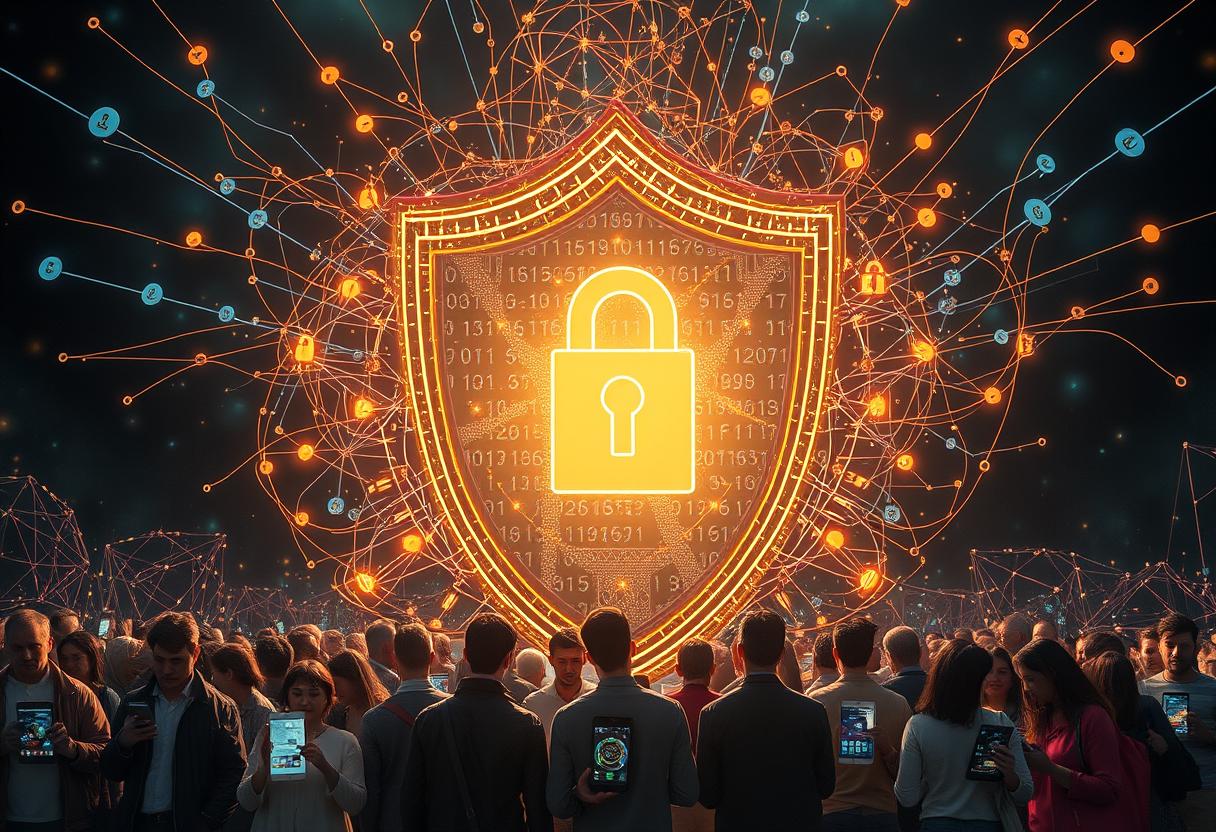
Quantum-Resistant Cryptography: The Ultimate Shield Against Quantum Threats
The rapid advancements in quantum computing pose a significant threat to traditional cryptographic systems. As quantum machines inch closer to breaking widely used encryption methods, the need for quantum-resistant cryptography has become more urgent than ever. Organizations, governments, and cybersecurity experts are racing to develop encryption techniques that can withstand quantum attacks, ensuring data security in the future digital landscape.
The Quantum Computing Threat to Classical Cryptography
Traditional encryption methods, such as RSA and ECC (Elliptic Curve Cryptography), rely on mathematical problems that are infeasible for classical computers to solve within a reasonable timeframe. However, quantum computers leverage principles like superposition and entanglement to perform calculations at an unprecedented scale, rendering these encryption methods vulnerable.
Shor’s algorithm, a quantum computing breakthrough developed in 1994, demonstrates how quantum computers can efficiently factor large numbers, breaking RSA encryption in minutes. Likewise, ECC and Diffie-Hellman key exchanges can be cracked, exposing sensitive communications and financial transactions. Researchers at Google and IBM have already achieved significant milestones in quantum computing, with IBM’s quantum roadmap predicting fault-tolerant quantum machines within the next decade. The emergence of large-scale quantum computers could potentially render modern security infrastructures obsolete.
The Rise of Post-Quantum Cryptography
Post-quantum cryptography (PQC) refers to cryptographic algorithms designed to withstand quantum computing attacks. Unlike classical encryption, these algorithms rely on complex mathematical problems that even quantum computers struggle to solve efficiently. The National Institute of Standards and Technology (NIST) has been leading an initiative to standardize post-quantum cryptographic methods to safeguard digital security against quantum threats.
Several quantum-resistant cryptographic algorithms have been developed, including:
- Lattice-Based Cryptography: Uses the difficulty of solving lattice problems, such as Learning With Errors (LWE) and Shortest Vector Problem (SVP), which are resistant to quantum attacks.
- Hash-Based Cryptography: Utilizes cryptographic hash functions to create secure digital signatures, ensuring long-term security even in the quantum era.
- Code-Based Cryptography: Relies on the hardness of decoding random linear codes, making it a strong candidate for quantum-safe encryption.
- Multivariate Polynomial Cryptography: Uses multivariate equations, which are computationally challenging for both classical and quantum computers.
- Isogeny-Based Cryptography: Leverages the complexity of computing isogenies between elliptic curves, providing robust security.
Dr. Michele Mosca, a leading expert in quantum computing and cryptography, warns, “Organizations need to act now to future-proof their security systems. If we wait until quantum computers break encryption, it will be too late.”
The Role of Hybrid Cryptographic Systems
Transitioning to quantum-resistant cryptography is a complex process that requires careful integration into existing systems. A promising approach is hybrid cryptographic systems that combine classical and quantum-resistant algorithms. These systems ensure compatibility with current infrastructure while preparing for a post-quantum future.
For instance, organizations are adopting hybrid TLS (Transport Layer Security) protocols that incorporate both classical and post-quantum cryptography to provide a layered defense mechanism. This approach allows enterprises to gradually shift towards full quantum resistance while maintaining security in the interim period.
Challenges in Implementing Quantum-Resistant Cryptography
Despite the promising advancements, implementing quantum-resistant cryptography comes with significant challenges:
- Performance Overhead: Many post-quantum algorithms require larger key sizes, leading to increased computational and storage requirements.
- Compatibility Issues: Existing encryption infrastructures must be adapted to support new cryptographic methods without disrupting current operations.
- Standardization Delays: The process of evaluating, testing, and standardizing post-quantum algorithms is still ongoing, delaying widespread adoption.
- Adversarial Evolution: Cybercriminals and malicious entities are continuously evolving, necessitating ongoing research and updates to cryptographic methods.
According to a 2023 report by the World Economic Forum, over 60% of enterprises are unaware of the looming quantum threat, while only a fraction have begun preparations. This highlights the urgent need for increased awareness and proactive adoption of quantum-safe encryption.
Expert Opinions on Quantum Security
Leading cryptographers and cybersecurity experts emphasize the importance of immediate action. Dr. Lily Chen, head of NIST’s post-quantum cryptography project, stresses the necessity of migration plans:
“Organizations should begin testing and integrating post-quantum cryptography solutions now. The shift won’t be instantaneous, and waiting until quantum computers are fully developed will put sensitive data at risk.”
Similarly, Dr. Scott Aaronson, a prominent quantum computing researcher, highlights the unpredictability of quantum advancements: “While we cannot predict the exact timeline of large-scale quantum computers, history has shown that technological breakthroughs often arrive sooner than expected. It’s crucial to stay ahead of the curve.”
Preparing for a Quantum-Secure Future
With quantum computers expected to achieve practical breakthroughs in the coming decades, organizations must start preparing for a post-quantum security paradigm now. Governments and industries are investing heavily in quantum-safe encryption research, ensuring long-term protection against evolving cyber threats.
A layered security approach combining classical encryption, post-quantum cryptography, and quantum key distribution (QKD) will be crucial in safeguarding sensitive data. Google and IBM are already experimenting with quantum-safe algorithms, while NIST’s upcoming standards are expected to be widely adopted across industries.
The Path Forward
The transition to quantum-resistant cryptography is not just an option—it is an imperative. Organizations that begin integrating post-quantum cryptographic methods today will be better positioned to withstand quantum-driven cyber threats in the future. By staying ahead of the curve, we can ensure a secure, quantum-resistant digital world. Quantum-Resistant Cryptography
Stay informed with daily updates from Blockchain Magazine on Google News. Click here to follow us and mark as favorite: [Blockchain Magazine on Google News].
Disclaimer
Blockchain Magazine publishes content submitted by third-party agencies, partners, and clients. Any such posts are categorized and tagged accordingly:
- Sponsored Content: Posts labeled as "Sponsored" are paid placements submitted by third-party agencies or clients. Blockchain Magazine does not endorse or express any views regarding the information contained in these posts. The opinions expressed belong solely to the respective authors and do not reflect the official policy or position of Blockchain Magazine.
- Press Releases: Posts labeled as "Press Release" are paid PR submissions provided by our partners and clients. These are published as received and should be considered as promotional content.
The information provided in such posts is strictly for informational purposes only and should not be interpreted as financial, investment, or professional advice. Blockchain Magazine does not recommend, endorse, or promote any specific products, services, or companies mentioned. Readers are strongly encouraged to conduct independent research and consult with a qualified professional before making any financial or investment decisions.
Additionally, all featured images accompanying such posts are intended as creative depictions of the subject matter. There is no intent to offend or misrepresent any individual, institution, or entity. If any content or imagery is found to be objectionable, please reach out to us at [email protected], and we will promptly review the concern.
About the Author: Veronica Cruz





Get Blockchain Insights In Inbox
Stay ahead of the curve with expert analysis and market updates.