
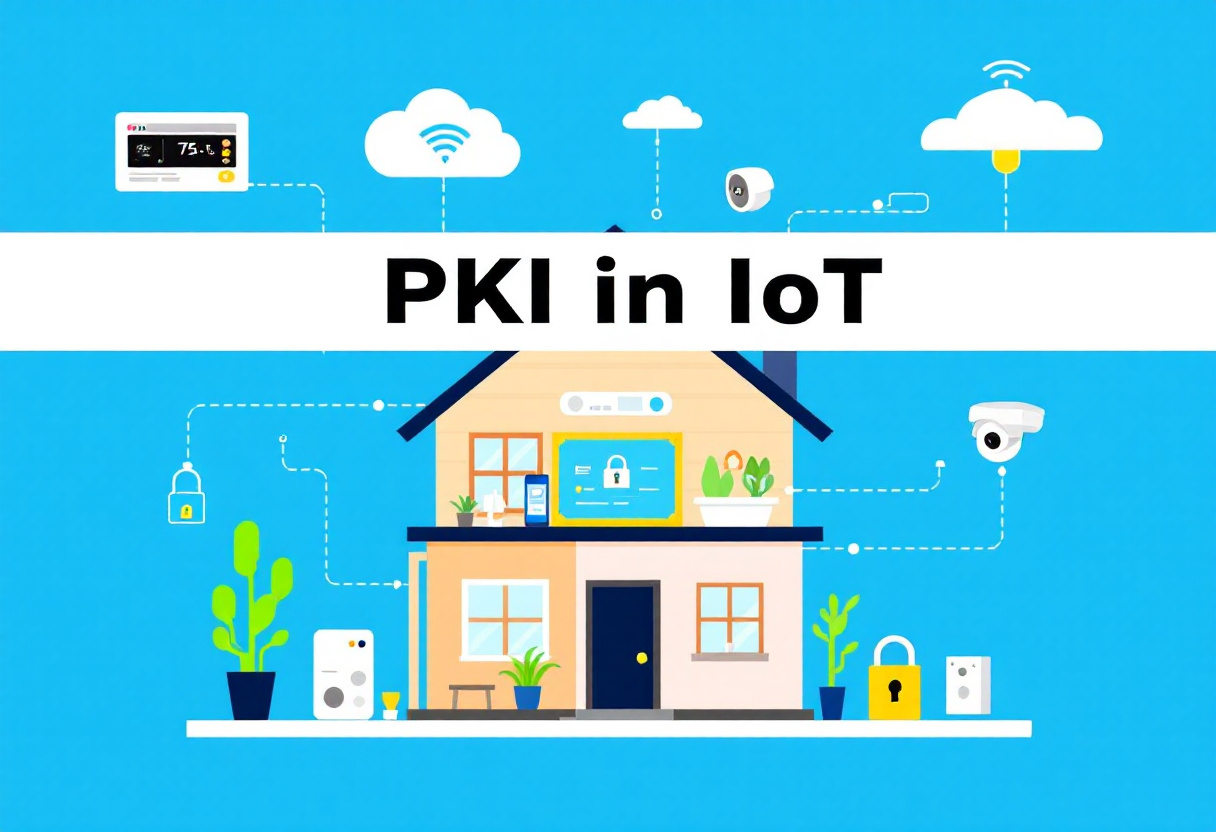
PKI in IoT: Securing the Internet of Things with Digital Certificates!
The world is buzzing with smart devices. From refrigerators that remind you to buy milk to cars that drive themselves, the Internet of Things (IoT) is changing everything. It’s an era of pure convenience, where technology handles things we used to do manually. But here’s the catch: the more connected we get, the more vulnerable we become. Every device linked to the internet is a potential entry point for hackers. Your smart home security system? Hackable. Your pacemaker? Vulnerable. Even industrial systems powering entire cities? Not immune. The need for ironclad security has never been greater, and this is where Public Key Infrastructure (PKI in IoT) steps in like a digital bodyguard. PKI is the invisible force that keeps the IoT world from collapsing into chaos.
PKI: The Digital Bouncer Keeping Hackers Out!
Think of PKI as the ultimate bouncer at the club of the digital world. It doesn’t let just anyone in—it checks IDs, verifies who’s legit, and keeps troublemakers out. In simple terms, PKI works by issuing digital certificates to IoT devices, ensuring that only trusted and verified devices, users, and systems can communicate. These certificates act as unique IDs, preventing hackers from impersonating devices or intercepting communications.
Without PKI, it’s like having an open-door policy for cybercriminals. With PKI, it’s a fortress of trust, where every device is accounted for and securely connected.
Why Old-School Security Just Won’t Cut It Anymore!
Passwords? Way too weak. Firewalls? Hackers can bypass them. Two-factor authentication? Better, but not foolproof. IoT devices need something stronger, and traditional security methods just can’t keep up. The problem is simple: IoT isn’t like regular internet-connected devices. We’re not just talking about phones and computers—we’re talking about millions of devices talking to each other 24/7. Hackers aren’t playing fair. They’re exploiting weak spots in IoT networks, launching massive attacks, and turning unprotected devices into zombie bots for cyber warfare.
PKI solves these problems by creating a trust-based system, ensuring that only real, authenticated devices can talk to each other. No impersonators. No eavesdropping. Just pure, secure communication.
How PKI Puts Hackers on the Run!
PKI isn’t just another security tool—it’s the ultimate weapon against cyber threats. Here’s what it does to keep IoT safe:
It Locks Down Device Communication
Imagine your smart home talking to your smartwatch. If hackers intercept the conversation, they could manipulate the data, tricking your devices into doing things they shouldn’t. PKI encrypts every communication, making it impossible for outsiders to read or alter it.
It Stops Imposters in Their Tracks
Cybercriminals love pretending to be legitimate devices to sneak into networks. PKI stamps every device with a unique digital identity, ensuring that only trusted devices get access. No ID? No entry.
It Keeps Software Updates Safe
Ever heard of hackers sneaking malware into software updates? It’s a thing, and it’s terrifying. PKI ensures that every software update is verified before being installed, so no malicious code can sneak in.
It Protects Devices from Cradle to Grave
IoT devices don’t just exist—they have lifecycles. From manufacturing to deployment to eventual retirement, PKI manages security at every stage. It authenticates devices at birth, secures them during their lifetime, and decommissions them safely when they’re no longer in use.
Smart Cars, Smart Homes, Smart Everything—PKI Protects Them All!
PKI isn’t just a fancy security upgrade—it’s the foundation of trust in a world where IoT devices run our daily lives. Here’s where it’s making a massive impact:
Self-Driving Cars: Keeping Hackers Out of the Driver’s Seat
Autonomous vehicles are incredible, but they also need unbreakable security. PKI ensures that only authorized commands and updates are accepted, preventing hackers from hijacking control.
Medical Devices: Protecting Lives, Not Just Data
Imagine a hacker remotely messing with a pacemaker or insulin pump. It’s the stuff of nightmares. PKI ensures that medical IoT devices only respond to legitimate signals, keeping patients safe.
Smart Homes: No More Digital Break-Ins
Your smart lock, security cameras, and voice assistants are only as secure as their network. PKI ensures that only trusted users and devices can interact with your smart home, keeping intruders out.
Industrial IoT: Defending the Backbone of Civilization
Factories, power grids, and water treatment plants rely on IoT for automation and monitoring. If a hacker takes control, entire cities could go dark. PKI prevents unauthorized access, ensuring that critical infrastructure remains protected.
The Future of IoT Security: PKI Is Just Getting Started!
The IoT explosion isn’t slowing down, and neither are cyber threats. The future will be filled with even more connected devices, which means security has to evolve just as fast.
Expect PKI to become:
- More automated, eliminating human errors in security management.
- Powered by AI, predicting and stopping cyber threats before they happen.
- Seamlessly scalable, protecting billions of IoT devices effortlessly.
Companies and industries that fail to implement PKI will be sitting ducks for cyberattacks, while those that do will build future-proof security systems.
Ultimately
We’re living in a time where everything is connected, but that also means everything is vulnerable. The only way to keep IoT devices safe is with a security framework that’s designed for the future—and that’s exactly what PKI provides. It’s not just about keeping data safe. It’s about keeping lives, businesses, and entire industries secure.
So, if you’re in the IoT game, PKI isn’t optional—it’s essential.
Stay informed with daily updates from Blockchain Magazine on Google News. Click here to follow us and mark as favorite: [Blockchain Magazine on Google News].
Disclaimer
Blockchain Magazine publishes content submitted by third-party agencies, partners, and clients. Any such posts are categorized and tagged accordingly:
- Sponsored Content: Posts labeled as "Sponsored" are paid placements submitted by third-party agencies or clients. Blockchain Magazine does not endorse or express any views regarding the information contained in these posts. The opinions expressed belong solely to the respective authors and do not reflect the official policy or position of Blockchain Magazine.
- Press Releases: Posts labeled as "Press Release" are paid PR submissions provided by our partners and clients. These are published as received and should be considered as promotional content.
The information provided in such posts is strictly for informational purposes only and should not be interpreted as financial, investment, or professional advice. Blockchain Magazine does not recommend, endorse, or promote any specific products, services, or companies mentioned. Readers are strongly encouraged to conduct independent research and consult with a qualified professional before making any financial or investment decisions.
Additionally, all featured images accompanying such posts are intended as creative depictions of the subject matter. There is no intent to offend or misrepresent any individual, institution, or entity. If any content or imagery is found to be objectionable, please reach out to us at [email protected], and we will promptly review the concern.
About the Author: Peter Raid





Get Blockchain Insights In Inbox
Stay ahead of the curve with expert analysis and market updates.