DDOS Attack: The Silent Disruptor of Blockchain and Crypto Networks
Picture a bustling digital metropolis—blockchains humming, crypto trades zipping, miners and validators weaving the fabric of a decentralized dream. Now imagine a storm rolling in, unseen and relentless, flooding the streets with chaos until the city grinds to a halt. That’s a DDoS attack—Distributed Denial of Service—the silent saboteur of the crypto cosmos. In a world where uptime is king and trust is the currency, these assaults don’t just disrupt; they threaten the very soul of blockchain. From Ethereum’s infancy to Solana’s 2021 blackout, DDoS strikes have left scars. Today, in March 2025, as Web3 explodes, this invisible menace looms larger than ever—a phantom poised to rattle the chains of decentralization. Buckle up for a wild ride through the shadows of disruption.
The Ghost in the Machine: What Is a DDoS Attack?
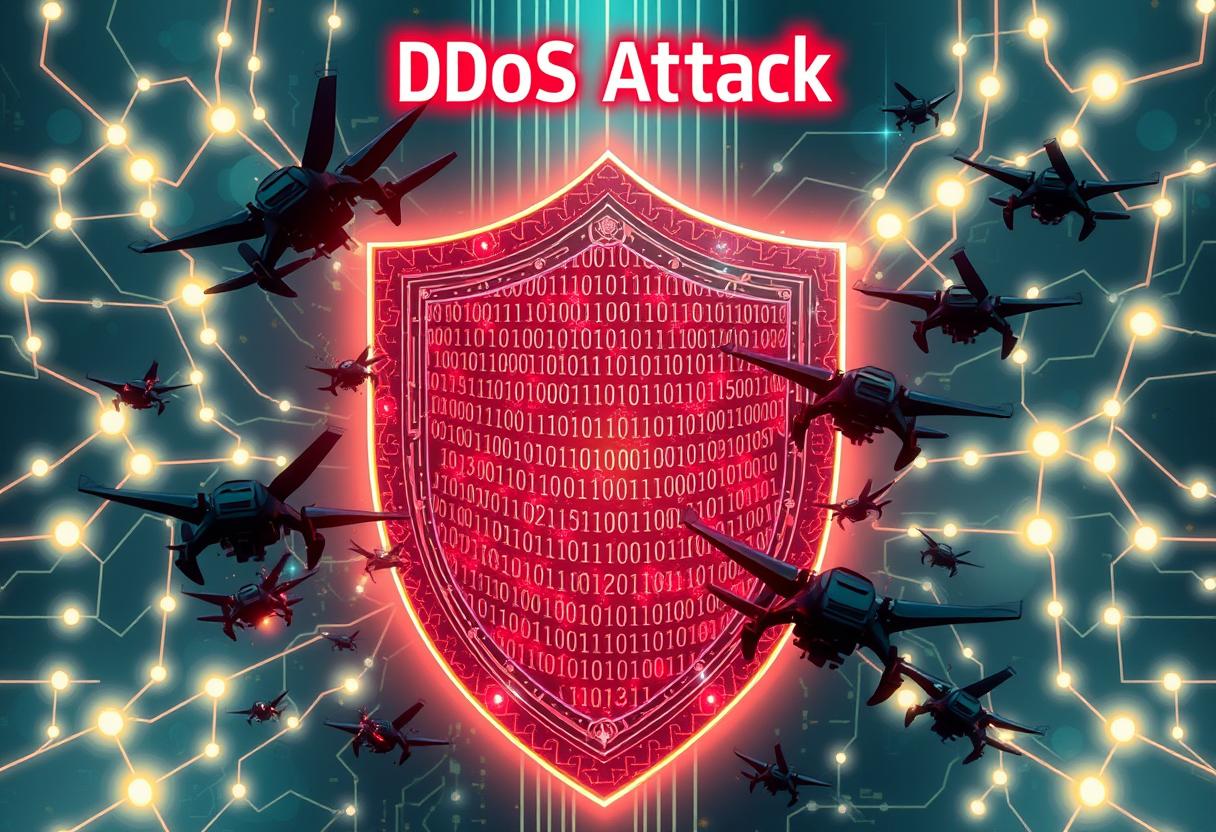
A DDoS attack is digital warfare at its sneakiest. Imagine thousands of zombie computers—botnets—unleashing a tsunami of junk traffic at a target. Websites, servers, even entire networks drown under the deluge, too overwhelmed to function. It’s not about stealing data or cracking codes; it’s about choking the system until it gasps for air. In the blockchain realm, where every node, wallet, and exchange is a lifeline, this isn’t just an annoyance—it’s a dagger to the heart.
Born in the late ‘90s, DDoS matured into a monster by the 2010s, fueled by cheap botnet rentals on the dark web—$10 an hour can unleash hell. For crypto networks, the stakes are sky-high. Blockchains thrive on availability; if nodes can’t sync or users can’t transact, the dream of a seamless, trustless world crumbles. It’s the perfect crime: silent, scalable, and maddeningly hard to trace. And as crypto’s value soars—$3 trillion in market cap by 2025—DDoS has found a juicy target.
The Early Blows: DDoS Meets Blockchain
Blockchain wasn’t always a DDoS darling. Bitcoin, the granddaddy, shrugged off early attacks with its sheer node count—over 15,000 by 2025—making it a fortress too vast to flood. But Ethereum? That’s where the tale gets spicy. In 2016, fresh off its launch, Ethereum faced a DDoS barrage tied to the DAO hack fallout. Malicious actors spammed the network with junk transactions, bloating blocks and stalling nodes. Gas prices spiked, sync times lagged, and the infant chain wobbled. The fix? Hard forks and patches—but the lesson stuck: decentralization doesn’t mean invincibility.
Fast forward to 2021, and Solana felt the sting. Billed as Ethereum’s speed-demon rival, Solana boasted 50,000 transactions per second. Then came September 14—a 17-hour blackout. A bot swarm, allegedly tied to a grape-themed ICO, flooded Solana’s transaction queue with 400,000 requests per second. Validators crashed, the chain froze, and $15 billion in market cap teetered. Restarting took a village—manual coordination across continents. Solana bounced back, but the message was clear: even the fastest blockchains bleed under DDoS.
Read more The Critical Role of Real-Time Monitoring in Web3: Amazing Ways to Improve Security Against Hacking
The Crypto Kill Zones: Where DDoS Hits Hardest
DDoS doesn’t just poke at blockchains—it hunts their soft spots. Exchanges are prime prey. In 2023, Binance weathered a 40-minute DDoS blitz, halting withdrawals as panic tweets lit up X. Traders lost millions in arbitrage windows; trust took a hit. Coinbase, Kraken, and smaller platforms have all danced with this devil—centralized hubs are juicy targets, and crypto’s lifeblood flows through them.
Nodes and validators? Fair game too. Ethereum’s post-Merge Casper setup relies on 500,000+ validators by 2025. Flood a chunk of them—say, via a staking pool like Lido—and sync stalls. Transactions pile up, dApps like Uniswap stutter, and gas fees soar. Smaller chains, with fewer nodes, fare worse. In 2024, Polygon’s zkEVM testnet buckled under a DDoS wave, exposing the fragility of scaling solutions still finding their feet.
Then there’s the wildcard: miners and RPC providers. Pre-Merge Ethereum miners faced DDoS barrages aimed at their rigs, disrupting hash power. Today, remote procedure call (RPC) services like Infura—Web3’s unsung heroes—bridge dApps to blockchains. A 2022 Infura outage, partly DDoS-driven, crippled Meta Mask for hours. When the pipes clog, the whole ecosystem chokes.
The Motive Maze: Why Target Crypto?
Who’s behind the curtain? DDoS isn’t random—it’s a weapon with intent. Profit’s a big driver. Pump-and-dump crews flood rival exchanges to freeze trades, spiking their pet coins. In 2023, a Dogecoin knockoff surged 300% during a Kraken DDoS hit—coincidence? Doubtful. Ransom’s another game; hackers demand BTC to call off the dogs. Bitfinex paid out in 2016, setting a grim precedent.
Revenge and ideology spice the mix. Hacktivists hate crypto’s carbon past—pre-Casper Ethereum was a prime target. Rival chains play dirty too; whispers link Solana’s 2021 crash to an Ethereum fanboy flex. And nation-states? They’re in the shadows. North Korea’s Lazarus Group, flush with crypto heists, allegedly wields DDoS to destabilize Western exchanges. In a $5 trillion digital economy, disruption’s a geopolitical chess move.
The Silent Sting: Why DDoS Hurts Blockchain More
Here’s the kicker: DDoS hits blockchain harder than Web2. A Netflix outage annoys; a Binance freeze bleeds millions. Crypto’s always-on ethos—24/7 trades, DeFi yields, NFT drops—means downtime’s a death knell. Trust, the bedrock of decentralization, frays when nodes vanish or wallets lock. In 2024, a 12-hour Avalanche outage tanked a $50 million DeFi pool—users fled, spooked by the silence.
Scalability amplifies the pain. Solana’s speed crumbled under spam; Ethereum’s Layer 2s like Arbitrum lean on sequencer nodes—DDoS bait. Centralization creep doesn’t help. Lido’s 32% stake in Ethereum validators is a bullseye; Infura’s ubiquity a choke point. Web2 giants like Amazon lean on CDNs—Cloudflare shrugs off 100 million requests per second. Crypto’s decentralized DNA? It’s a shield and a shackle, leaving gaps DDoS exploits with glee.
Fighting the Phantom: Crypto’s Counterstrike
The blockchain brigade’s not defenseless. Ethereum’s Merge cut energy noise, but post-2022, devs hardened nodes with rate-limiting and spam filters. Solana’s post-2021 overhaul added “QUIC” protocols, slashing flood risks—downtime’s rare now. Exchanges like Binance deploy AI-driven traffic scrubbers, sniffing out bot swarms before they bite. Cloudflare’s Web3 gateways, launched in 2023, shield dApps with enterprise-grade muscle.
Community’s key too. Bitcoin’s node army laughs at DDoS; Ethereum’s validator sprawl—500,000 strong—spreads the load. Decentralized RPCs like Pocket Network dilute Infura’s risk. And sharding, Ethereum’s 2026 ace, could fractalize the chain, making total floods a pipe dream. Still, it’s a cat-and-mouse game. Botnets evolve—2025’s AI-powered swarms mimic legit traffic, dodging filters. Crypto’s fighting, but DDoS is a hydra—cut one head, another grins.
The Future Fog: DDoS in Web3’s Wilds
March 2025 paints a tense tableau. Web3’s booming—$200 billion in DeFi, NFTs in every wallet, DAOs ruling the roost. But DDoS lurks, a specter in the fog. Solana’s stable, Ethereum’s sharding nears, yet smaller chains like Aptos quake under fresh attacks. Exchanges brace for daily skirmishes; a 2025 Binance scare cost $80 million in frozen trades. Nation-states eye crypto’s trillions—DDoS is their silent spear.
The stakes? Colossal. A week-long Ethereum blackout could crash $500 billion in assets. A DeFi domino fall might spark a 2008-style panic. Yet, resilience grows. Web3’s pioneers—devs, hodlers, dreamers—forge armor from every blow. DDoS won’t kill blockchain; it’ll temper it. This silent disruptor’s a test, a forge, a crucible. The chains that bend won’t break—they’ll rise, sharper, stronger, ready for the next storm.
The Last Whisper: DDoS as Crypto’s Dark Muse
DDoS isn’t just a villain—it’s a mirror. It exposes cracks, forces grit, and fuels evolution. From Ethereum’s 2016 wobble to Solana’s 2021 wake-up, each hit birthed tougher tech. In 2025, as Web3 straddles billions in value and billions in dreams, DDoS is the uninvited guest keeping the party honest. Silent, sinister, unstoppable? Maybe. But blockchain’s a beast too—a hydra of its own. The disruptor’s dance is far from done, and the crypto cosmos spins on, defiant in the chaos.
Stay informed with daily updates from Blockchain Magazine on Google News. Click here to follow us and mark as favorite: [Blockchain Magazine on Google News].
Disclaimer
Blockchain Magazine publishes content submitted by third-party agencies, partners, and clients. Any such posts are categorized and tagged accordingly:
- Sponsored Content: Posts labeled as "Sponsored" are paid placements submitted by third-party agencies or clients. Blockchain Magazine does not endorse or express any views regarding the information contained in these posts. The opinions expressed belong solely to the respective authors and do not reflect the official policy or position of Blockchain Magazine.
- Press Releases: Posts labeled as "Press Release" are paid PR submissions provided by our partners and clients. These are published as received and should be considered as promotional content.
The information provided in such posts is strictly for informational purposes only and should not be interpreted as financial, investment, or professional advice. Blockchain Magazine does not recommend, endorse, or promote any specific products, services, or companies mentioned. Readers are strongly encouraged to conduct independent research and consult with a qualified professional before making any financial or investment decisions.
Additionally, all featured images accompanying such posts are intended as creative depictions of the subject matter. There is no intent to offend or misrepresent any individual, institution, or entity. If any content or imagery is found to be objectionable, please reach out to us at [email protected], and we will promptly review the concern.
About the Author: Veronica Cruz





Get Blockchain Insights In Inbox
Stay ahead of the curve with expert analysis and market updates.