

How AI and Blockchain Are Saving Lives in Healthcare
Imagine a world where your doctor knows exactly what’s wrong with you before you even step into the office, and your medical records are as secure as a bank vault. Sounds very sci-fi, right? Well, thanks to AI and blockchain, this is becoming reality in healthcare! These two tech titans are teaming up to revolutionize how we diagnose, treat, and manage health. So, grab a coffee, and let’s dive into why AI and blockchain in healthcare are the duo we didn’t know we needed.
AI and Blockchain in Healthcare: Transforming the Future
-
AI enhances diagnostics: AI analyzes medical images and data to detect diseases like cancer faster than humans, improving accuracy.
-
Blockchain secures data: Blockchain encrypts patient records, ensuring privacy and preventing unauthorized access.
-
Synergy boosts efficiency: Combining AI and blockchain creates a trustworthy, efficient healthcare system.
-
Challenges exist: High costs and regulatory hurdles may slow adoption, but the potential is significant.
-
Future looks bright: Predictive models and global data networks could revolutionize healthcare
How AI and Blockchain Are Changing Healthcare
AI and blockchain are like the ultimate tag team in healthcare. AI, with its ability to analyze vast amounts of data, helps doctors diagnose diseases and create personalized treatment plans. Blockchain, on the other hand, acts like a digital vault, keeping patient data secure and shareable only with permission. Together, they’re making healthcare faster, safer, and more patient-focused. Research suggests they could transform everything from drug development to telemedicine, though challenges like cost and regulations need addressing.
Read More: Learn How Blockchain Use in Healthcare Saves Lives!
Why It Matters
These technologies aren’t just tech buzzwords—they’re solving real problems. AI can spot patterns in medical data that humans might miss, while blockchain ensures that sensitive information stays private. This combo could lead to better health outcomes and more trust in the system. However, the complexity of integrating them means it’s not a quick fix, and opinions vary on how fast they’ll scale.
What’s Next
The evidence leans toward a future where AI predicts health risks early, and blockchain creates global, secure health networks. While some experts are cautious due to costs, the potential for personalized, secure healthcare is exciting.
AI and Blockchain in Healthcare: A Game-Changing Duo
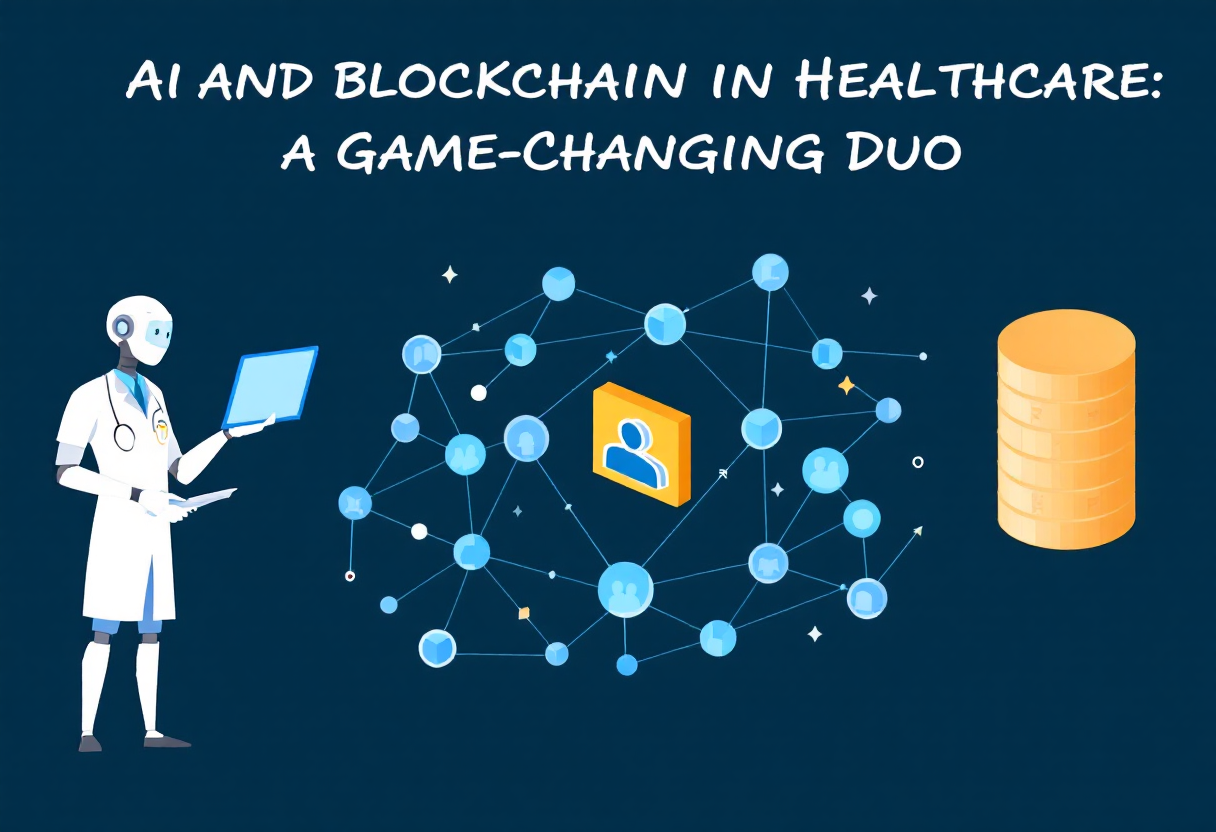
Image that your doctor knows you’re at risk for a health issue before you even feel a twinge, and your medical records are locked up tighter than a pirate’s treasure chest. Sounds like something out of a sci-fi flick, right? Well, AI and blockchain in healthcare are making this a reality. These two tech superstars are joining forces to shake up how we diagnose, treat, and manage health. So, grab a snack, and let’s explore why this duo is the talk of the town.
Check out this video by Crypto Lady talking about how ALYT is revolutionizing medicine with Blockchain & AI.
What’s the Buzz About AI in Healthcare?
AI is like the brainy kid in class who aces every test. In healthcare, it’s sifting through mountains of data—think X-rays, blood tests, and even your smartwatch stats—to help doctors make smarter calls. From catching cancer early to predicting heart trouble, AI’s like a trusty sidekick that never sleeps. And the best part? It’s making healthcare quicker, cheaper, and way more accurate. Who wouldn’t want a genius assistant like that?
AI-Powered Diagnostics
Diagnosing a disease can feel like hunting for a needle in a haystack. But AI? It’s got a magnet. It scans medical images, lab results, and patient data to spot issues faster than you can say “stethoscope.” For instance, AI can detect breast cancer in mammograms with precision that matches top radiologists . It’s like giving doctors a superpower to see what’s hiding in plain sight.
Personalized Treatment Plans
You’re not a cookie-cutter patient, so why should your treatment be? AI dives into your DNA, lifestyle, and medical history to whip up a treatment plan that’s as unique as your playlist. Got high blood pressure? AI might suggest a diet and meds tailored just for you. It’s like having a personal health chef cooking up the perfect wellness recipe.
Blockchain: The Trust Machine in Healthcare
If AI’s the brain, blockchain’s the brawn. This tech is all about keeping your data safe and sound. Think of it as a digital diary with an unbreakable lock. In healthcare, blockchain makes sure your medical records stay private, even when cyber villains are lurking. In a world where data breaches are scarier than a haunted house, blockchain’s the hero we need.
Securing Patient Records
Your health info is nobody’s business but yours. Blockchain uses some serious math wizardry to encrypt your records, making them hacker-proof. It also creates a record that can’t be tampered with, so your data stays as pure as fresh snow. It’s like storing your medical history in a vault only you and your doctor can open.
Streamlining Data Sharing
Ever had to mail your medical records to a new doctor? It’s like sending a carrier pigeon in 2025. Blockchain lets hospitals, clinics, and labs share your data instantly and securely. Moving across the country? Your new doc can access your records faster than you can unpack. It’s seamless, safe, and oh-so-modern.
Why AI and Blockchain Are a Perfect Match
AI and blockchain are like peanut butter and jelly—awesome alone, but mind-blowing together. AI and blockchain in healthcare blend AI’s smarts with blockchain’s security to create a system that’s fast, trustworthy, and downright futuristic. It’s like pairing a detective with a safe that even Houdini couldn’t crack.

Enhanced Data Integrity
AI’s only as good as the data it gets. Feed it junk, and you’ll get junky results. Blockchain ensures the data is clean and untampered, giving AI a solid foundation to work its magic. It’s like serving a chef the freshest ingredients for a gourmet dish—no expired cans here.
Smarter Decision-Making
With blockchain’s bulletproof data, AI can make decisions you’d bet your life on. Picture AI analyzing your records to predict a heart attack, knowing the data’s legit. That’s the kind of trust that saves lives. It’s like having a fortune teller who’s always right (AI and Blockchain Synergy).
Real-World Applications
Enough talk—let’s see AI and blockchain in action. From speeding up drug discovery to making telemedicine cooler than ever, these techs are already out there changing lives.
Drug Development
Creating a new drug is like solving a puzzle with a billion pieces. AI sifts through data to find promising compounds, while blockchain tracks every step to keep things honest. Together, they’re slashing years off the process, getting meds to patients faster. Check out the tweet by Health Tech World talking about how clinical trials can absorb future trade shocks through AI & blockchain.
From crisis to resilience: how clinical trials can absorb future trade shocks through AI and blockchain: https://t.co/xNGgoK45aP #ai #blockchain #healthtech pic.twitter.com/kJZgogGig7
— Health Tech World (@healthtechworld) May 1, 2025
Telemedicine Advancements
Thanks to the pandemic, telemedicine’s now a household name. AI’s making it smarter by monitoring your vitals during virtual visits, while blockchain keeps your data private. It’s like seeing your doctor in your PJs with CIA-level security.
Case Study: MedRec
Meet MedRec, a project that’s nailing AI and blockchain in healthcare. It uses blockchain to store patient records securely and AI to analyze them for better care. Hospitals share data safely, and patients get VIP treatment. It’s a win-win that’s setting the stage for the future.
Challenges to Overcome

Though AI and blockchain aren’t as easy as they seem at times. They’re like that shiny new gadget with a tricky setup guide. There are some hurdles to clear before they’re omnipresent.
Cost and Scalability
Rolling out AI and blockchain isn’t cheap. It’s like trying to give every hospital a spaceship. Smaller clinics might struggle to afford it, and scaling the tech to handle healthcare’s data tsunami is a big ask. But Rome wasn’t built in a day, right?
Regulatory Concerns
Healthcare’s got more rules than a board game marathon. AI and blockchain need to play nice with laws like HIPAA and GDPR. Navigating this maze is like juggling flaming torches, but it’s crucial for keeping patients safe.
The Future of Healthcare with AI and Blockchain
Imagine a world where AI and blockchain make healthcare as easy as ordering Uber Eats. 
Predictive Healthcare Models
AI’s getting scarily good at playing health psychic. Using blockchain’s secure data, it can spot risks years ahead. High cholesterol? AI might nudge you to skip the fries before it’s a problem. It’s like having a guardian angel with a medical degree.
Global Health Data Networks
Blockchain could connect hospitals worldwide, creating a global health database. Doctors in Tokyo could access the same secure data as those in Toronto. It’s like the internet, but for your medical history—safe, fast, and game-changing .
Finally
AI and blockchain in healthcare are like the ultimate power couple, blending brains and brawn to reshape how we stay healthy. From sharper diagnoses to ironclad data security, they’re paving the way for a future where healthcare’s faster, safer, and more personal. Sure, there are bumps to smooth out, but the potential’s massive. Here’s to a world where your doctor’s as smart as a supercomputer and your records are locked tighter than a dragon’s hoard!
FAQs
How do AI and blockchain work together?
AI achieves 95% accuracy in skin cancer diagnosis vs. 86.6% by humans; blockchain secures EHRs with hash functions.
Can they improve patient privacy?
Blockchain prevents data breaches, saving billions annually; AI uses federated learning for privacy-preserving analysis.
What are real-world uses?
MedRec uses blockchain for EHRs and AI for predictive analytics; AI tools like DeepTox analyze 12,000+ drugs.
What are the challenges?
Blockchain faces scalability issues (e.g., 10-minute transaction delays); implementation costs are high for small clinics.
What’s the future?
By 2026, AI and blockchain could save $150 billion annually; global health networks are proposed for interoperable EHRs.
Stay informed with daily updates from Blockchain Magazine on Google News. Click here to follow us and mark as favorite: [Blockchain Magazine on Google News].
Disclaimer
Blockchain Magazine publishes content submitted by third-party agencies, partners, and clients. Any such posts are categorized and tagged accordingly:
- Sponsored Content: Posts labeled as "Sponsored" are paid placements submitted by third-party agencies or clients. Blockchain Magazine does not endorse or express any views regarding the information contained in these posts. The opinions expressed belong solely to the respective authors and do not reflect the official policy or position of Blockchain Magazine.
- Press Releases: Posts labeled as "Press Release" are paid PR submissions provided by our partners and clients. These are published as received and should be considered as promotional content.
The information provided in such posts is strictly for informational purposes only and should not be interpreted as financial, investment, or professional advice. Blockchain Magazine does not recommend, endorse, or promote any specific products, services, or companies mentioned. Readers are strongly encouraged to conduct independent research and consult with a qualified professional before making any financial or investment decisions.
Additionally, all featured images accompanying such posts are intended as creative depictions of the subject matter. There is no intent to offend or misrepresent any individual, institution, or entity. If any content or imagery is found to be objectionable, please reach out to us at [email protected], and we will promptly review the concern.
About the Author: Anaya Malhotra





Get Blockchain Insights In Inbox
Stay ahead of the curve with expert analysis and market updates.