
O nq

Trump’s Executive Order Signals Lighter Touch on Crypto Regulation to Boost U.S. Industry

Last Updated: May 2, 2025By

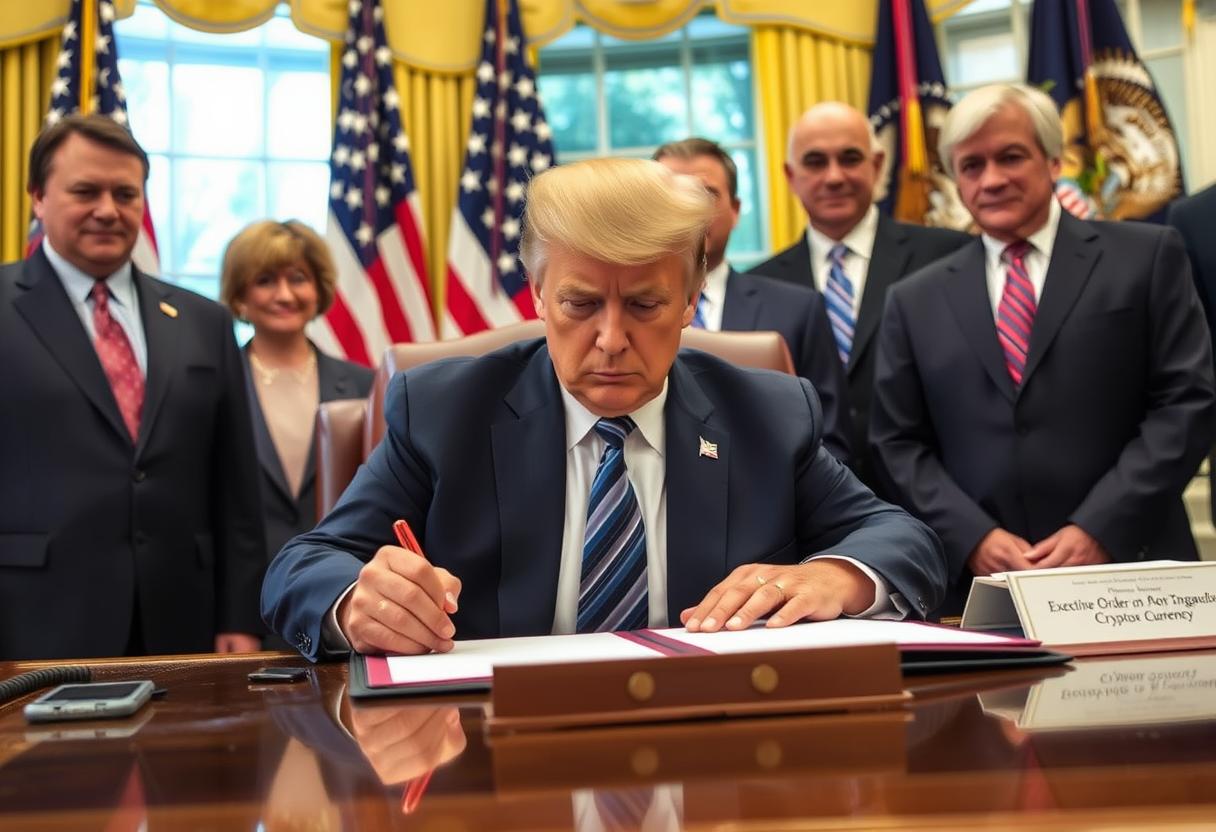
In a pivotal move that could reshape the future of cryptocurrency regulation in the United States, former President Donald J. Trump has signed an executive order aimed at easing restrictions on digital assets and blockchain technology. This shift in policy is seen as a strategic effort to foster innovation, attract investment, and establish the U.S. as a dominant force in the global crypto industry.

The executive order, titled “Strengthening American Leadership in Digital Financial Technology,” reverses several previous regulatory measures that had been viewed as restrictive to the crypto market. With a pro-business approach, the Trump administration aims to create a regulatory environment that encourages the development of blockchain-based solutions while ensuring market stability and investor confidence.

A Shift in Regulatory Approach

One of the key aspects of the executive order is its stark contrast to prior regulatory frameworks. During previous administrations, digital assets faced increasing scrutiny, with concerns over fraud, illicit transactions, and financial stability prompting lawmakers to impose stringent regulations. Trump’s approach, however, signals a lighter touch, focusing on innovation rather than overregulation.

Industry leaders have welcomed the move, arguing that excessive government intervention has previously stifled the potential of blockchain technology. Under the new order, agencies such as the Securities and Exchange Commission (SEC), Commodity Futures Trading Commission (CFTC), and the U.S. Treasury will be required to adopt a more balanced approach to oversight, ensuring both consumer protection and market growth.

Revocation of Previous Policies

A central feature of Trump’s executive order is the repeal of several previous regulations that were seen as hindrances to the expansion of the crypto industry. Notably, the order rescinds Executive Order 14067, which had laid the groundwork for tighter federal oversight of cryptocurrencies and explored the possibility of a Central Bank Digital Currency (CBDC).

The order also withdraws the “Framework for International Engagement on Digital Assets” that had been issued by the Treasury Department in 2022. This marks a shift toward a more domestically focused regulatory approach, prioritizing American economic interests over international regulatory alignment.

Prohibition of Central Bank Digital Currencies (CBDCs)

One of the most significant components of the executive order is its outright prohibition of a U.S. government-backed digital currency. Trump has long been an outspoken critic of CBDCs, arguing that they could give the federal government excessive control over financial transactions, potentially infringing on individual freedoms and privacy.

By banning CBDC development, the administration has made it clear that the private sector will take the lead in innovating digital payment solutions. This decision has been praised by cryptocurrency advocates who view decentralized finance (DeFi) as a more transparent and secure alternative to state-controlled digital currencies.

Crypto entrepreneur and investor Michael Saylor, co-founder of MicroStrategy, commented on the decision, stating:


“A government-backed digital currency is the opposite of what Bitcoin and decentralized assets represent. Trump’s move to keep digital innovation in the hands of the private sector ensures financial sovereignty for individuals and fosters true economic growth.”

Creation of the Presidential Working Group on Digital Assets

In addition to rolling back previous restrictions, the executive order establishes a Presidential Working Group on Digital Asset Markets. This task force, chaired by the White House AI & Crypto Czar, includes representatives from the SEC, CFTC, Treasury Department, and Federal Reserve.

The working group will be responsible for:

  • Developing a federal regulatory framework for digital assets.
  • Addressing concerns related to stablecoins, crypto exchanges, and decentralized finance (DeFi).
  • Evaluating the potential creation of a national digital asset reserve to support financial security.
  • Ensuring that regulations encourage technological innovation rather than hinder it.

The working group is expected to consult with blockchain experts, fintech leaders, and economists to ensure that any future regulatory decisions align with industry needs.

Impact on the Cryptocurrency Industry

The cryptocurrency market has reacted positively to the executive order, with major digital assets experiencing an upward surge following the announcement. Bitcoin, Ethereum, and other prominent cryptocurrencies saw significant price increases, reflecting renewed investor confidence in the sector.

Crypto industry leaders view the order as a game-changer. By reducing regulatory uncertainty, it allows blockchain-based companies to innovate without fear of abrupt government intervention. This is expected to attract more institutional investors, as well as encourage venture capital funding in blockchain startups.

Additionally, financial institutions that have been hesitant to engage with digital assets due to compliance concerns may reconsider their stance in light of a more business-friendly regulatory landscape.

Potential Risks and Concerns

While the executive order has been widely praised, critics argue that a more lenient regulatory approach could increase risks such as fraud, money laundering, and market manipulation. Some policymakers believe that stronger protections are necessary to prevent financial crime in the crypto space.

Furthermore, with the U.S. stepping back from global regulatory frameworks, there are concerns that the lack of coordination with other nations may create jurisdictional conflicts in cross-border digital transactions.

However, supporters of the order counter that a pro-innovation stance does not mean a lack of oversight. They argue that a clear, business-friendly regulatory framework will encourage compliance among crypto firms while still protecting consumers.

Market Response and Future Outlook

Following the executive order’s announcement, several key developments have taken place:

  • XRP saw an 8% surge after the SEC dropped its lawsuit against Ripple, a move that many believe aligns with the administration’s pro-crypto stance.
  • Bitcoin surpassed the $50,000 mark for the first time in over a year, signaling renewed optimism in the market.
  • Institutional investors, including major Wall Street firms, have increased their crypto holdings, anticipating regulatory clarity and business-friendly policies.

Looking ahead, experts believe that this policy shift will position the United States as a global leader in digital finance. Countries like El Salvador, the UAE, and Singapore have already embraced crypto-friendly regulations, and the U.S. is now signaling its intent to compete in the blockchain economy.

Final Thoughts

Trump’s executive order marks a turning point for cryptocurrency regulation in the United States. By rolling back restrictive policies, prohibiting CBDCs, and forming a dedicated task force to oversee digital assets, the administration is taking decisive steps to support blockchain innovation.

While critics warn of potential risks, industry experts see this as a necessary move to ensure that the U.S. does not fall behind in the digital finance revolution. The executive order paves the way for increased adoption, stronger investment flows, and a more stable regulatory environment for cryptocurrencies.

As the crypto industry continues to evolve, this shift in policy will likely shape the future of decentralized finance, blockchain applications, and digital asset investments for years to come.Crypto regulation

Stay informed with daily updates from Blockchain Magazine on Google News. Click here to follow us and mark as favorite: [Blockchain Magazine on Google News].


Disclaimer

Blockchain Magazine publishes content submitted by third-party agencies, partners, and clients. Any such posts are categorized and tagged accordingly:

  • Sponsored Content: Posts labeled as "Sponsored" are paid placements submitted by third-party agencies or clients. Blockchain Magazine does not endorse or express any views regarding the information contained in these posts. The opinions expressed belong solely to the respective authors and do not reflect the official policy or position of Blockchain Magazine.
  • Press Releases: Posts labeled as "Press Release" are paid PR submissions provided by our partners and clients. These are published as received and should be considered as promotional content.

The information provided in such posts is strictly for informational purposes only and should not be interpreted as financial, investment, or professional advice. Blockchain Magazine does not recommend, endorse, or promote any specific products, services, or companies mentioned. Readers are strongly encouraged to conduct independent research and consult with a qualified professional before making any financial or investment decisions.

Additionally, all featured images accompanying such posts are intended as creative depictions of the subject matter. There is no intent to offend or misrepresent any individual, institution, or entity. If any content or imagery is found to be objectionable, please reach out to us at [email protected], and we will promptly review the concern.

About the Author: Veronica Cruz

Veronica cruz
veronica cruz is a Electronic computer Engineering student, passionate blockchain enthusiast and crypto researcher, dedicated to exploring emerging trends in Web3, DeFi, and digital assets. Her insightful analysis and engaging content empower readers to navigate the evolving world of cryptocurrency with confidence.
Newsletter icon

Get Blockchain Insights In Inbox

Stay ahead of the curve with expert analysis and market updates.