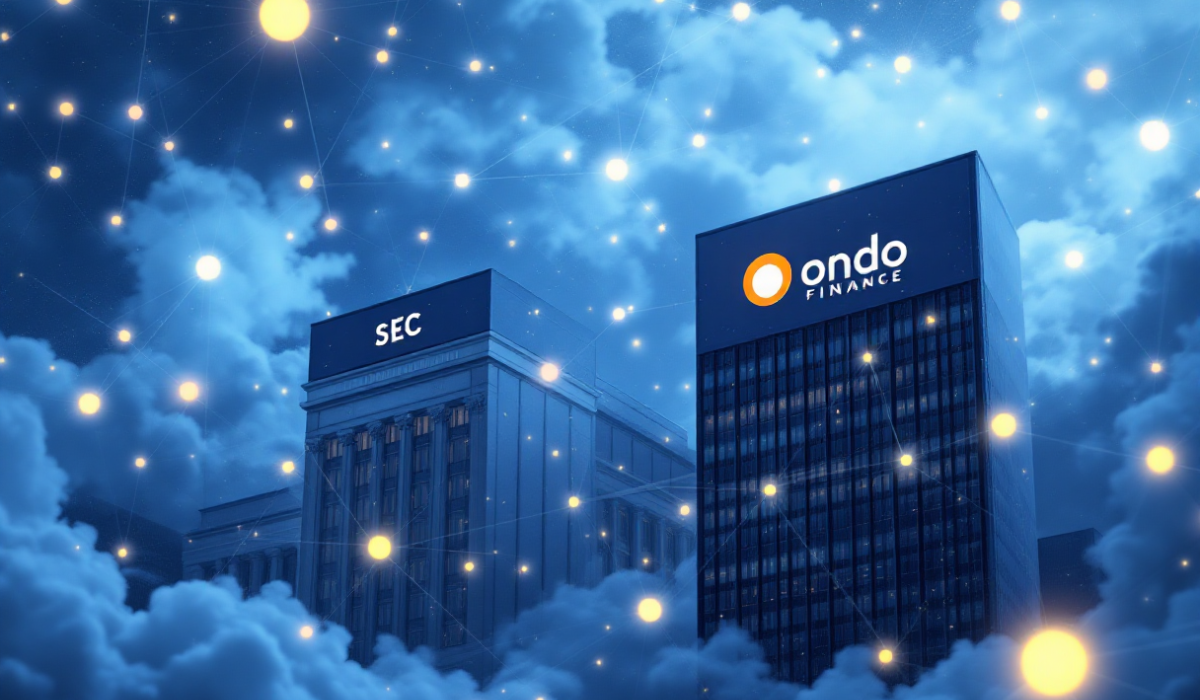
SEC and Ondo Finance: Pioneering a Tokenized Securities Framework
Tokenized Securities: A New Era for U.S. Finance
- Key Development: The SEC and Ondo Finance are discussing a regulatory framework for tokenized securities, aiming to integrate blockchain-based assets into U.S. financial markets.
- What It Means: This could make investing in stocks, bonds, and real estate easier, cheaper, and more accessible, but it requires clear rules to protect investors.
- Why It’s Exciting: Tokenized securities might let you own a piece of expensive assets, like a skyscraper, for just a few dollars, all secured by blockchain.
- Be Cautious: The crypto market can be risky, and new rules are still forming, so research thoroughly before diving in.
Understanding Tokenized Securities
Tokenized securities are like digital versions of traditional investments—think stocks or bonds—but stored on a blockchain, which is a secure, transparent digital ledger. They’re exciting because they can be traded anytime, split into tiny pieces for small investors, and cost less to manage. The SEC, which oversees U.S. investments, is working with Ondo Finance, a company specializing in these digital assets, to create rules that ensure safety and fairness.
Why This Matters
For everyday investors, this could mean new ways to grow your money, like buying a fraction of a company’s stock or a slice of real estate without needing a fortune. Blockchain’s transparency helps prevent fraud, but the market’s ups and downs and unclear regulations mean you should proceed carefully. This framework could make investing more inclusive, but it’s not a guaranteed win.
Imagine a world where you could own a piece of a skyscraper, a share in a startup, or a slice of a government bond with just a few dollars and a click. This isn’t a distant dream—it’s the promise of tokenized securities, a revolutionary way to invest using blockchain technology. These digital versions of traditional assets, like stocks or real estate, are gaining traction, and a recent meeting between the U.S. Securities and Exchange Commission (SEC) and Ondo Finance on April 24, 2025, could bring them closer to mainstream adoption. Their discussion about a regulatory framework for tokenized securities in the U.S. marks a pivotal moment, blending the innovation of blockchain with the stability of regulated finance. For investors, businesses, and blockchain enthusiasts, this dialogue signals a future where investing is more accessible, efficient, and transparent. Let’s explore what this means, why it’s happening, and how it could reshape the financial landscape.
Today (April 24), @OndoFinance and Davis Polk & Wardwell LLP met with the SEC’s Crypto Task Force to walk through key regulatory considerations around tokenized securities. It's an important step in shaping compliant tokenization pathways for US investors.
Ondo's proposed… pic.twitter.com/sYrtKDqa0U
— Fang Zhang (@FangZhangyy) April 24, 2025
The Rise of Tokenized Securities
Tokenized securities are traditional financial instruments—stocks, bonds, real estate, or even private equity—converted into digital tokens on a blockchain. This technology, known for powering cryptocurrencies like Bitcoin, offers a secure, transparent way to record ownership and transactions. Unlike regular securities, which are traded during set market hours and often involve middlemen like brokers, tokenized securities can be traded 24/7, split into fractions for small investors, and managed with lower costs thanks to blockchain’s efficiency. “Tokenization can turn illiquid assets into liquid ones, opening up new markets and opportunities,” an industry expert observes.
The potential is staggering. By 2030, the global market for tokenized securities could reach $10 trillion, according to some projections. Already, firms like Securitize have tokenized over $1 billion in assets, including real estate and private funds, showing the growing appetite for these digital investments . But for tokenized securities to go mainstream, they need clear rules to ensure they’re safe and fair, which is where the SEC and Ondo Finance come in.
A Landmark Meeting
On April 24, 2025, Ondo Finance met with the SEC’s Crypto Asset Working Group to propose a regulatory framework for tokenizing publicly traded U.S. securities. Joined by legal advisors from Davis Polk & Wardwell, Ondo outlined a structure that aligns with existing securities laws while embracing blockchain’s potential. The discussion covered critical areas: how to register tokenized securities, ensure broker-dealer compliance, regulate trading platforms, and address state corporate laws. Ondo also suggested innovative ideas, like regulatory sandboxes—safe spaces where firms can test new financial products under relaxed rules while still protecting investors.
“We’re committed to working with the SEC to develop a framework that balances innovation with investor protection,” said Ondo’s Chief Strategy Officer, emphasizing the firm’s collaborative approach .
This meeting is part of the SEC’s broader effort to engage with crypto firms, reflecting a shift toward proactive regulation. The agency’s Crypto Task Force, which hosted a roundtable with other firms like Kraken on April 25, is gathering insights to shape the future of digital assets .
Why Now? The Push for Regulation
The SEC’s role is to protect investors, maintain fair markets, and support capital formation. With tokenized securities, this mission is more complex. These assets fall under securities laws because they represent investments with expected profits, as defined by the Howey Test. But applying decades-old regulations to blockchain technology isn’t straightforward. Questions about custody, settlement, and fraud prevention need answers, and the SEC is under pressure to provide clarity without stifling innovation.
Ondo Finance, a leader in tokenizing assets like real estate and bonds, is well-positioned to guide this process. Its platform streamlines the issuance and trading of digital securities, ensuring compliance with current rules. The firm’s $3 billion market cap and growing influence make it a key player in these talks. “Regulatory certainty is crucial for the growth of tokenized securities,” a blockchain firm spokesperson noted, highlighting the stakes of this dialogue.
A Global Race for Tokenization
The U.S. isn’t alone in exploring tokenized securities. Switzerland has become a hub for digital assets with clear regulations, while the European Union’s Markets in Crypto-Assets (MiCA) framework is set to standardize rules across member states. In the UK, a 2023 report by UK Finance outlined missions to accelerate tokenization, citing benefits like faster settlements and reduced risks (UK Finance). These global efforts put pressure on the U.S. to act swiftly to maintain its financial leadership.
The SEC’s discussions with Ondo Finance suggest a willingness to adapt. Regulatory sandboxes, successfully used in fintech, could allow firms to experiment with tokenized securities under oversight, fostering innovation while addressing risks. “The prospect of sandbox exemptions offers a glimpse into potential industry transformation,” an analyst remarked .
Read More : SEC Postpones Grayscale’s Ethereum ETF Staking Plan, Keeps Crypto on Edge
What’s at Stake for Investors and Businesses
A clear framework could transform finance. For investors, tokenized securities mean access to assets once out of reach—think owning a fraction of a Manhattan penthouse or a startup’s equity for a few hundred dollars. Blockchain’s transparency reduces fraud risks, and smart contracts automate tasks like dividend payments, saving time and money. Businesses benefit too, raising capital more efficiently by issuing tokens directly to global investors, bypassing costly intermediaries.
But challenges remain. Security is a concern—blockchain hacks, though rare, can be devastating. Market volatility could affect token values, and traditional firms may resist change due to entrenched systems. “While the meeting is a good start, translating discussions into actionable regulations will be the real test,” a financial analyst cautioned . Education is also key; investors need to understand blockchain to make informed choices.
The Road Ahead
The SEC and Ondo Finance’s collaboration is a beacon of progress, but it’s just the beginning. The framework will likely define how tokenized securities are classified, registered, and traded, setting standards for years to come. It may also influence global regulations, as other countries watch the U.S. closely. For now, the market’s reaction is muted, but industry insiders are optimistic. “This is a step toward a more inclusive financial system,” a blockchain expert said, capturing the potential.
Investors and businesses should stay informed through platforms like CoinMarketCap and join X discussions for insights. Starting small with tokenized assets on regulated platforms like Coinbase can help you explore this space safely. As the framework takes shape, tokenized securities could redefine wealth creation, making finance more open and dynamic.
Stay informed with daily updates from Blockchain Magazine on Google News. Click here to follow us and mark as favorite: [Blockchain Magazine on Google News].
Disclaimer
Blockchain Magazine publishes content submitted by third-party agencies, partners, and clients. Any such posts are categorized and tagged accordingly:
- Sponsored Content: Posts labeled as "Sponsored" are paid placements submitted by third-party agencies or clients. Blockchain Magazine does not endorse or express any views regarding the information contained in these posts. The opinions expressed belong solely to the respective authors and do not reflect the official policy or position of Blockchain Magazine.
- Press Releases: Posts labeled as "Press Release" are paid PR submissions provided by our partners and clients. These are published as received and should be considered as promotional content.
The information provided in such posts is strictly for informational purposes only and should not be interpreted as financial, investment, or professional advice. Blockchain Magazine does not recommend, endorse, or promote any specific products, services, or companies mentioned. Readers are strongly encouraged to conduct independent research and consult with a qualified professional before making any financial or investment decisions.
Additionally, all featured images accompanying such posts are intended as creative depictions of the subject matter. There is no intent to offend or misrepresent any individual, institution, or entity. If any content or imagery is found to be objectionable, please reach out to us at [email protected], and we will promptly review the concern.
About the Author: Anna Woods

editor's pick


Get Blockchain Insights In Inbox
Stay ahead of the curve with expert analysis and market updates.