
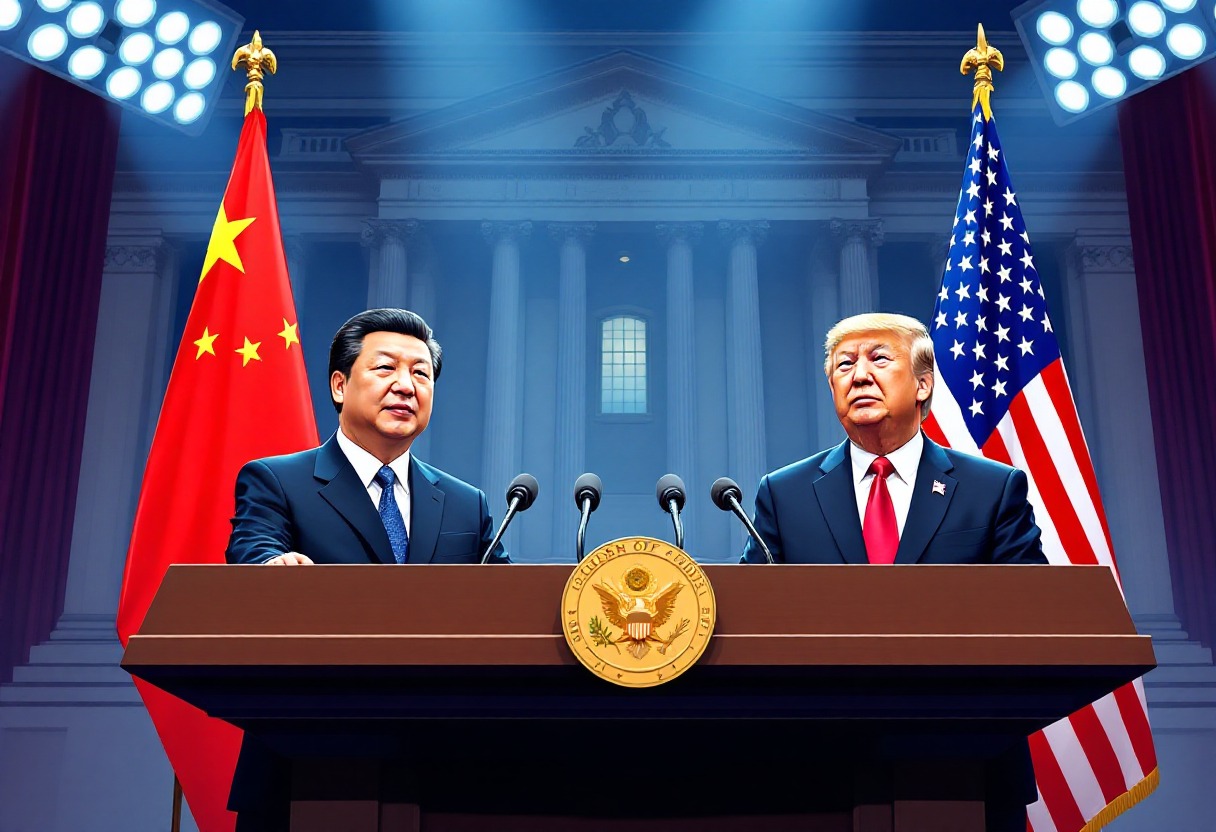
China’s Tariff Hike on US Imports: A Trade War Twist That Could Reshape Crypto Fortunes!
China’s Tariff Hike on US Imports
China officially declared its plan to enhance U.S. import tariffs on various products starting from April 2025 in an increasingly tense trade relationship with the United States. These trade policy changes from China constitute a major trade alignment that emerges specifically because of current U.S. economic measures targeting Chinese goods and services. The upcoming trade policies concerning U.S. imports have analysts examining their effects on China-U.S. trade and worldwide supply lines along with economic performance in these two nations.
Beijing’s Strategic Trade Pivot
New China-wide import tariff rates starting from 15 percent up to 125 percent will affect U.S. shipments that include agricultural goods together with cars and machinery and electronics and energy-related products per statements from the People’s Republic of China Ministry of Commerce. China implemented new tariffs that reflect its dedication to address what Beijing views as U.S. protectionist policies against Chinese businesses.
The government made this change in policy during a period marked by increasing trade friction about technology transfer together with foreign investment restriction issues. The Chinese government uses this move as a part of its overall goal to maintain industry stability while combating external pressure through economic measures aimed at preserving domestic competitiveness.
Context: The U.S.-China Trade Standoff Reignites
Throughout recent years the United States launched various trade restrictions targeting Chinese technological companies because it wished to protect intellectual assets and maintain national cybersecurity. The recent Chinese tariff decision functions as part of a sustained competitive strategy dedicated to decrease U.S. import dependence while promoting domestic manufacturing capabilities.
The Chinese official statement presented two points – support for fair trade practices and inevitable retaliatory measures due to ongoing economic pressure from Washington.
BREAKING: China to impose 34% tariffs on all US goods from April 10, finance ministry says https://t.co/hmYVuhGV3n pic.twitter.com/ifK1Z6SSdB
— Reuters (@Reuters) April 4, 2025
The application of the new tariffs creates major impacts on various key industrial sectors.
Agriculture
The new Chinese tariff increases will directly impact U.S. exports of soybeans, corn, wheat, dairy and pork. Many U.S. farmers rely on China as their biggest export market so the new move will cause both decreased prices and reduced demand particularly since rural economic sectors struggle with inflation and weather disruption.
Automotive and Machinery
US-made automotive vehicles together with their parts and industrial machinery now encounter increased competition in the Chinese industrial sector. These industrial sectors have been experiencing decreasing Chinese exports which might decrease further until diplomatic settlements solve the situation.
Technology and Electronics
Technical businesses requiring Chinese production centers and supplying components to China must cope with rising operational costs and manufacturing disruptions in their supply chain. Multiple consumer products including chemicals, sensors, batteries and electronic items must navigate complicated international trade rules when exporting to China.
Energy and Commodities
The modified tax regime directly affects United States exports of liquefied natural gas (LNG), oil derivatives along with rare earth minerals. The new trade duties create conditions for China to relocate its buying activities from North American markets into alternative regions including Russia and the southern parts of Europe and South American regions.
Ripple Effects on the Global Economy
During a period of worldwide economic disharmony and rising inflation levels the new tariffs take effect. According to the World Trade Organization predictions escalating tariffs will probably diminish the next year’s global GDP growth by 1.2 percent unless manufacturers resolve conflicts.
Central banks and multinational corporations currently modify their economic projections together with their investment frameworks because of anticipated persistent marketplace instability. The financial markets experienced modest market jitters after the press release because investors began analyzing the upcoming trade-related impacts on sectors that depended on cross-border commerce.
The imposition of trade restrictions by China raises the price of U.S. exports in the market.
The market search for replacement options by Chinese Consumers began after Chinese Buyers Seek Alternatives.
Supplies in global chains begin shifting after Chinese buyers modify their purchasing preferences.
The business costs rise for companies conducting operations across multiple nations as a result of E.
Strategic Adjustments from Both Sides
Both governments develop policy measures to prepare themselves for forthcoming trade limitations.
Through its “Made in China 2025” initiative China produces enhanced funding support for domestic industries alongside its push for independence in significant sectors such as AI robotics and aerospace technology.
The U.S. administration plans to develop support programs for bringing vital production back home including semiconductor and rare earth element manufacturing while encouraging alliances with the Indo-Pacific nations.
The new standard for the future will likely feature bilateral strategic distancing of production and industries which will lead to further splitting of international trade networks formed during the globalized era.
Business Community Reactions
The American Chamber of Commerce in China showed deep worries about the tariff measures because they foresee ongoing trade instability to create employment losses in major export industries. The China Council for the Promotion of International Trade maintains an assurance of timely financial support with alternative sourcing options for domestic firms.
Private companies throughout the globe review their supply chains by implementing regional production initiatives that minimize their dependence on distant global delivery systems which have become less accessible due to new regulatory restrictions.
Read more :Crypto Market Crashing Due to Tarriff War: What Investors Must Know
Path Forward: Is There Room for Negotiation?
Trade experts predict that despite the mounting pressure there still exist possibilities to negotiate solutions. Another report suggests that diplomatic representatives from both nations will meet ahead of the G20 Summit that summer to discuss trade relations within a broader geopolitical framework.
Enduring peace between the two nations needs substantial compromises from each side about the exchange of technologies along with the freedom of market participation and protection of investments. The connection between U.S.-China economic flows produces ongoing market instability and doubt which will affect all directly involved markets until the situation stabilizes.
Final Thoughts
The planned April 2025 tariff hike by China represents a turning point for the present-day economic relations between these two world-leading powers. Multiple relationships become deeply affected by this decision because it influences entire international trading networks. The future outlook for a restructured economic system between countries remains uncertain due to unanswered questions regarding this new tariff policy. All business leaders and governmental stakeholders and investors must demonstrate their capacity for speed and knowledge along with readiness to face evolving patterns in worldwide economic systems.
Stay informed with daily updates from Blockchain Magazine on Google News. Click here to follow us and mark as favorite: [Blockchain Magazine on Google News].
Disclaimer
Blockchain Magazine publishes content submitted by third-party agencies, partners, and clients. Any such posts are categorized and tagged accordingly:
- Sponsored Content: Posts labeled as "Sponsored" are paid placements submitted by third-party agencies or clients. Blockchain Magazine does not endorse or express any views regarding the information contained in these posts. The opinions expressed belong solely to the respective authors and do not reflect the official policy or position of Blockchain Magazine.
- Press Releases: Posts labeled as "Press Release" are paid PR submissions provided by our partners and clients. These are published as received and should be considered as promotional content.
The information provided in such posts is strictly for informational purposes only and should not be interpreted as financial, investment, or professional advice. Blockchain Magazine does not recommend, endorse, or promote any specific products, services, or companies mentioned. Readers are strongly encouraged to conduct independent research and consult with a qualified professional before making any financial or investment decisions.
Additionally, all featured images accompanying such posts are intended as creative depictions of the subject matter. There is no intent to offend or misrepresent any individual, institution, or entity. If any content or imagery is found to be objectionable, please reach out to us at [email protected], and we will promptly review the concern.
About the Author: Anna Woods

editor's pick



Get Blockchain Insights In Inbox
Stay ahead of the curve with expert analysis and market updates.