
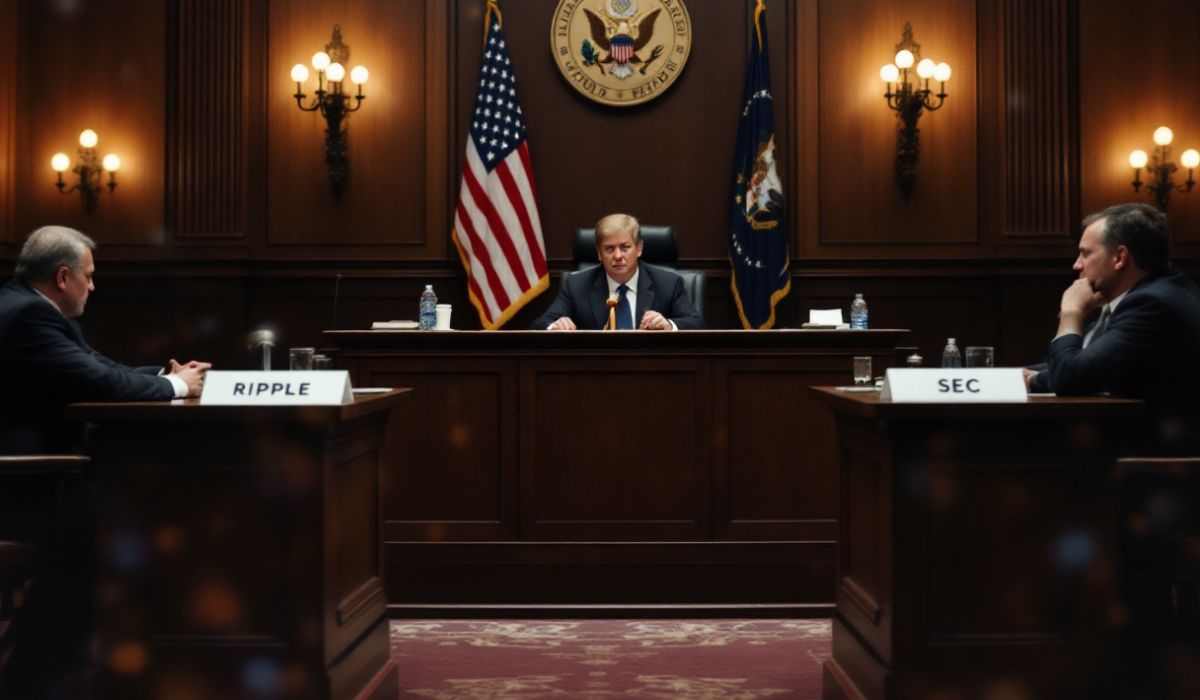
Ripple vs SEC Explained: Why This Case Could Change Crypto Regulation Forever
Imagine a courtroom drama with billions of dollars at stake and the future of cryptocurrency hanging in the balance. That’s exactly what the Ripple vs. SEC case has become, a high-stakes legal battle that has captured the attention of the blockchain world. The fight between Ripple Labs and the U.S. Securities and Exchange Commission (SEC) isn’t just about one company; it’s about how all digital assets might be regulated moving forward. With a resolution expected in 2025, the outcome could set a legal precedent that impacts the entire crypto industry.
The Backstory of Ripple vs SEC
The Ripple vs. SEC saga began in December 2020 when the SEC filed a lawsuit against Ripple Labs. The SEC accused Ripple of raising $1.3 billion through the unregistered sale of XRP. The SEC argued that XRP was a security, similar to a stock or bond, and should have been regulated as one. Ripple countered by saying that XRP was just a digital currency designed for cross-border payments, not an investment contract.
The crypto world watched closely, as the outcome of this case could influence how digital assets are regulated in the U.S. In July 2023, the case reached a significant moment. U.S. District Judge Analisa Torres ruled that XRP sales on public exchanges were not securities, which was a win for Ripple. However, the judge also ruled that Ripple’s $728 million in institutional sales did violate securities laws, leading to a $125 million fine for the company. Both sides are appealing the rulings, and a final decision is expected sometime in 2025. The stakes are high, as the outcome could set important rules for the entire crypto industry.
The Settlement A Turning Point
On May 8, 2025, Ripple and the SEC reached a long-awaited settlement, effectively closing one of crypto’s most consequential legal battles. Ripple agreed to pay a reduced fine of $50 million down from the $125 million originally imposed. The remainder, held in escrow, will be returned to the company. As part of the deal, both sides jointly requested the court to dissolve the permanent injunction that had barred Ripple from future securities violations. They also agreed to withdraw their respective appeals pending before the U.S. Court of Appeals for the Second Circuit.
Stuart Alderoty, Ripple’s Chief Legal Officer, hailed the agreement as a “resounding victory” for Ripple and the broader crypto industry.
“This settlement not only resolves our case but also sets a precedent for how digital assets should be regulated,” he posted on X .
Ripple CEO Brad Garlinghouse called the SEC’s decision to drop its appeal a “long overdue surrender.” However, not everyone is happy about this. SEC Commissioner Caroline A. Crenshaw disagreed strongly, saying the settlement hurts the agency’s ability to enforce rules. She wrote, “This agreement, alongside the dismantling of the SEC’s crypto enforcement program, really lets down the investing public.” Crenshaw criticized lifting the injunction, arguing that it might encourage other crypto companies to break securities laws without fearing any consequences.
Judge Denies Ripple and SEC Settlement Motion Due to Filing Error
BREAKING: 🇺🇸 SEC VS. RIPPLE $XRP SETTLEMENT BLOCKED!
Judge Torres REJECTS Ripple-SEC $50M settlement! 🔒
Despite agreement to cut Ripple’s fine from $125M & end injunction, the judge denied the request, citing wrong legal rule (62.1 instead of 60).
Courts need “exceptional… pic.twitter.com/K2Kacb8RTx
— Good Morning Crypto (@AbsGMCrypto) May 15, 2025
In a surprising development on May 15, 2025, Judge Analisa Torres denied the joint motion by Ripple and the SEC regarding their settlement agreement. The judge ruled that the motion was filed incorrectly under Rule 62.1, instead of Rule 60, which is the proper rule for modifying final judgments and requires showing exceptional circumstances. This error stopped the court from signaling how it might rule if the case returned from the appellate court.
This denial doesn’t reject the settlement itself; it just means Ripple and the SEC didn’t follow the correct legal procedure. As a result, the $125 million penalty and the injunction against Ripple remain in place for now. Legal experts, like attorney Fred Rispoli, suggest that Ripple and the SEC will likely refile their motion under Rule 60 soon, providing a stronger argument for reducing the penalty and lifting the injunction.
Following this procedural setback, XRP’s price briefly dropped from $2.65 to $2.30, reflecting market uncertainty. As of May 30, 2025, no further updates have been reported, indicating that Ripple and the SEC are likely preparing to resubmit their motion. This situation highlights the complexity of legal procedures in high-profile cases and the importance of following court rules closely.
🚨⚠️ SEC VS RIPPLE: SURPRISE TWIST JUST DROPPED.
Judge Torres REJECTED their $50M deal.
Now they’re stuck paying $125M—and taking the full penalty for the time being…
Here’s what it means (explained like you're 10):🧵👇🏻 pic.twitter.com/uPjSJ92lkU
— All Things XRP (@XRP_investing) May 15, 2025
|
Aspect |
Details |
|---|---|
|
Initial Lawsuit |
Filed in December 2020 by the SEC against Ripple Labs for unregistered XRP sales. |
|
Court Ruling (2023) |
Institutional sales violated securities laws; public exchange sales did not. |
|
Initial Penalty (2024) |
$125 million civil penalty and permanent injunction. |
|
Settlement Terms (May 8, 2025) |
$50 million fine, remaining escrow returned, injunction to be dissolved. |
|
Latest Development (May 15, 2025) |
Judge Torres denied the settlement motion as procedurally improper; parties must refile under Rule 60. |
|
Current Status |
$125 million penalty and injunction remain; parties expected to refile motion. |
Crypto Community Reaction
The Ripple vs. SEC settlement has sparked mixed reactions in the crypto world. Many industry insiders see it as a positive step toward clearer regulations, which could help other crypto companies negotiate similar agreements. “This is a win for the industry,” said Jane Smith, a crypto analyst. “It shows that there’s a path to compliance and that regulators are open to dialogue.”
However, not everyone agrees. Some critics worry that the settlement could weaken the SEC’s authority and make future enforcement actions more difficult. “While this is good for Ripple, it might set a precedent that could weaken future enforcement actions,” warned John Doe, a securities law professor.
Market reactions have been cautiously optimistic. Following the news, XRP spiked 5.4% to $2.29 before leveling off. Despite the positive news, some community members are concerned about Ripple’s practice of releasing XRP from escrow each month, arguing that this move lowers the token’s price. Although this issue is separate from the legal case, it remains a topic of debate within the XRP community.
Why This Case Could Change Crypto Regulation Forever
BREAKING: SEC FILES SETTLEMENT LETTER IN THE RIPPLE VS SEC CASE pic.twitter.com/ehO5YdyF6b
— Cryptoinsightuk (@Cryptoinsightuk) May 8, 2025
The Ripple vs SEC case, is a big deal for crypto regulation because it could change how digital assets are treated under U.S. law. Here’s why, in simple terms:
- Sets a Legal Precedent: The 2023 court ruling clarified that XRP’s institutional sales were securities, but public exchange sales weren’t. This distinction could guide how other cryptocurrencies are classified, giving crypto companies a clearer idea of what’s allowed.
- Signals a Friendlier SEC: The settlement, with Ripple paying a reduced $50 million fine and the SEC dropping its appeal, suggests the SEC, under new leadership like Acting Chairman Mark Uyeda, might be softening its stance. This could mean less aggressive enforcement against other crypto firms.
- Pushes for Clearer Rules: The case exposed how murky crypto regulations are. The settlement might pressure regulators to create specific guidelines, balancing innovation with investor protection, which could stabilize the industry.
- Encourages Legal Challenges: Ripple’s partial win and settlement might inspire other crypto companies to fight SEC actions, potentially leading to more court rulings that shape regulation.
- Raises Concerns About Enforcement: Critics, like SEC Commissioner Caroline Crenshaw, warn that the settlement weakens investor protections by letting Ripple off lightly. This debate could influence how strictly the SEC regulates crypto moving forward.
In short, the Ripple vs SEC outcome could lead to clearer, more crypto-friendly regulations, but it also sparks arguments about balancing innovation and investor safety. It’s a turning point that might define the future of crypto in the U.S. For the latest details, check sources like SEC statements.
Implications for Crypto Regulation
The Ripple vs. SEC case is a big deal for crypto regulation. Its resolution might indicate a change in the SEC’s approach, especially under Acting Chairman Mark Uyeda, who has already dropped some major enforcement actions against companies like Coinbase and Kraken.
Legal experts believe that Ripple’s win could encourage other crypto companies to challenge the SEC’s authority. This highlights the need for clearer rules. “This could lead to more defined regulatory boundaries,” said securities law professor John Doe. The case also revealed flaws in how the Howey Test, a standard for determining if something is a security—is applied to digital assets.
The timing is important. After the 2024 U.S. election, pro-crypto former commissioner Paul Atkins was appointed as SEC Chair, suggesting a more lenient stance towards crypto. This shift could influence future cases, especially those dealing with whether crypto trades on secondary markets are considered securities.
Read More: From Lawsuits to Listings, What’s Fueling Ripple Labs Valuation in 2025?
What It Means for the Crypto World
The Ripple vs. SEC settlement is set to have a big impact on the wider crypto industry. For Ripple, it removes a major legal obstacle, allowing the company to focus on growing again. XRP, the fourth-largest cryptocurrency, initially saw a price boost from the news, but recent price changes have been more modest. This case highlights the ongoing struggle between fostering crypto innovation and ensuring investor protection. As digital assets become more mainstream, regulators face growing pressure to find a balance. This settlement might indicate a move toward more cooperative and transparent regulation, offering hope for clearer rules in the crypto space.
The Ripple vs. SEC settlement is a crucial moment for the crypto industry. It will end one of the most high-profile legal battles and suggests a possible change in how regulators view digital assets. While many see it as a win for innovation, it also raises questions about the SEC’s role and the future of crypto regulation. As the industry continues to change, this case is likely to influence regulatory approaches for years to come.
FAQs
1. What is the Ripple vs SEC case about?
The SEC sued Ripple Labs in December 2020, alleging that XRP sales were unregistered securities offerings. The case debates whether XRP is a security under U.S. law.
2. What happened in the 2023 court ruling?
Judge Analisa Torres ruled that Ripple’s institutional XRP sales ($728 million) violated securities laws, but public exchange sales did not qualify as securities.
3. What was the proposed settlement?
On May 8, 2025, Ripple and the SEC agreed to a $50 million fine (down from $125 million), with the SEC dropping its appeal and dissolving a court injunction.
4. Why was the settlement motion denied?
On May 15, 2025, Judge Torres rejected the settlement motion due to a procedural error, as it was filed under the wrong rule (Rule 62.1 instead of Rule 60).
5. What’s the current status?
The $125 million penalty and injunction remain in place. Ripple and the SEC are expected to refile the settlement motion under Rule 60, likely within weeks.
Stay informed with daily updates from Blockchain Magazine on Google News. Click here to follow us and mark as favorite: [Blockchain Magazine on Google News].
Disclaimer
Blockchain Magazine publishes content submitted by third-party agencies, partners, and clients. Any such posts are categorized and tagged accordingly:
- Sponsored Content: Posts labeled as "Sponsored" are paid placements submitted by third-party agencies or clients. Blockchain Magazine does not endorse or express any views regarding the information contained in these posts. The opinions expressed belong solely to the respective authors and do not reflect the official policy or position of Blockchain Magazine.
- Press Releases: Posts labeled as "Press Release" are paid PR submissions provided by our partners and clients. These are published as received and should be considered as promotional content.
The information provided in such posts is strictly for informational purposes only and should not be interpreted as financial, investment, or professional advice. Blockchain Magazine does not recommend, endorse, or promote any specific products, services, or companies mentioned. Readers are strongly encouraged to conduct independent research and consult with a qualified professional before making any financial or investment decisions.
Additionally, all featured images accompanying such posts are intended as creative depictions of the subject matter. There is no intent to offend or misrepresent any individual, institution, or entity. If any content or imagery is found to be objectionable, please reach out to us at [email protected], and we will promptly review the concern.
About the Author: Peter Raid



Get Blockchain Insights In Inbox
Stay ahead of the curve with expert analysis and market updates.