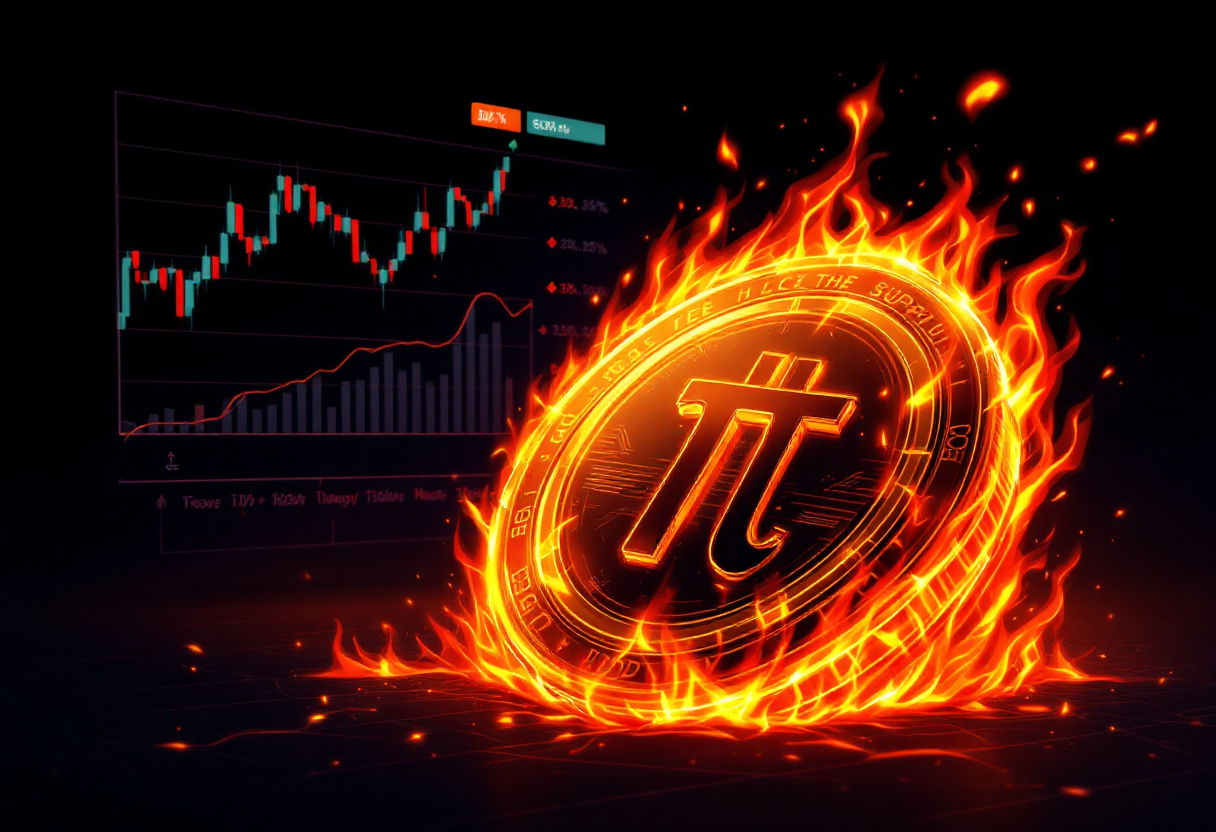
Pi Coin Burn Speculation: Is a Massive Supply Cut on the Horizon?
The cryptocurrency market thrives on speculation, and Pi Network is no exception. As Pi Coin edges closer to potential mainnet adoption, the discussion surrounding a possible supply reduction through a coin burn has intensified. Many investors and enthusiasts are eager to understand if such an event is likely and how it could impact the value of Pi Coin in the long run. In this article, we explore the fundamentals of coin burns, analyze past trends, and assess the likelihood of Pi Network implementing a substantial supply cut.
Understanding Coin Burns and Their Market Impact
A coin burn is a deflationary mechanism used in the cryptocurrency market to permanently remove a certain number of tokens from circulation. This is typically done by sending coins to an inaccessible wallet, effectively reducing the total supply. The primary goal of a coin burn is to create scarcity, which can drive up the price of the remaining tokens if demand remains strong.
Historically, several cryptocurrencies have implemented successful burns. Binance Coin (BNB), for instance, conducts quarterly burns to maintain a deflationary model. Similarly, Ethereum introduced EIP-1559, a mechanism that burns transaction fees to regulate supply growth. These cases have shown that well-executed burns can positively impact market perception and price.
For Pi Network, the situation is unique. Unlike traditional blockchain projects that are fully decentralized, Pi is still in its enclosed mainnet phase. This means any burning mechanism would be determined by the Pi Core Team rather than market-driven forces. However, speculation about a supply cut has been fueled by discussions within the community and the need to establish long-term value.
Is Pi Coin’s Supply Too Large?
One of the main arguments for a Pi Coin burn stems from concerns over its large supply. During its initial mining phase, millions of users worldwide were able to accumulate Pi at a rapid rate. While this incentivized adoption, it also created an environment where an oversupply of coins could become an issue once Pi enters open trading on major exchanges.
Pi Network’s economic model is designed to be sustainable, but the exact details of its tokenomics for the open mainnet remain unclear. If the circulating supply is too high, it could lead to inflationary pressure, suppressing the price. Many community members believe that a strategic burn could help mitigate these risks by ensuring that Pi Coin retains a more favorable supply-demand balance.
Possible Scenarios for a Pi Coin Burn
If a Pi burn were to happen, there are several ways it could be implemented:
- Transaction-Based Burning: A portion of transaction fees could be burned, similar to Ethereum’s model. This would introduce a gradual supply reduction mechanism.
- One-Time Large Supply Reduction: The Pi Core Team could announce a major burn before full mainnet launch, reducing total supply dramatically.
- User-Driven Burns: Community members could be given the option to voluntarily burn a percentage of their holdings in exchange for some form of benefit, such as increased network influence or governance power.
Each of these methods has different implications, and the feasibility depends on how the Pi Network’s developers choose to manage its long-term sustainability.
Will a Burn Actually Happen?
The Pi Core Team has remained largely silent on whether a burn will be introduced. While they have focused on building a strong ecosystem for utility, they have not indicated that supply manipulation is part of their roadmap. However, history shows that many blockchain projects make adjustments to their supply models once their tokens become tradable on major exchanges.
If Pi Coin were to experience significant downward price pressure upon its open mainnet launch, the team might consider introducing supply control mechanisms, including burning. However, until an official statement is made, speculation will continue to drive conversations within the community.
What Would a Pi Coin Burn Mean for Investors?
For Pi Coin holders, a burn would likely be seen as a bullish development. Reducing supply could increase the scarcity of the coin, potentially leading to higher valuations. However, this would also depend on demand dynamics and whether Pi Network can drive real-world adoption.
A supply cut without strong demand would have limited impact, as investor confidence ultimately depends on the utility of Pi within its ecosystem. If Pi Network can successfully integrate payment solutions, decentralized applications, and other use cases, then a burn could serve as an additional catalyst for long-term growth.
Expert Perspectives on Pi Coin Burn
“A well-structured coin burn can drive price appreciation, but only if accompanied by strong ecosystem development. Without real-world utility, a burn alone won’t sustain long-term value.” — Crypto Analyst, John Peterson.
Crypto industry expert Michael Torres, who has analyzed deflationary mechanisms in various projects, added: “Pi Network has a unique challenge. Unlike coins that launched with pre-set burning mechanisms, Pi’s economic model is still evolving. A burn could help, but it must be part of a larger strategy for growth and adoption.”
A Real-World Case: Lessons from Shiba Inu’s Burn Strategy
One notable example of a large-scale burn impacting a cryptocurrency was Shiba Inu’s initiative, where over 410 trillion SHIB tokens were burned to control inflation. While this increased scarcity, it was only successful because of the strong community and ecosystem built around SHIB. The same principle applies to Pi Coin—if the community and developers can drive real-world use cases, a supply cut could play a significant role in shaping its value.
Final Thoughts
While a Pi Coin burn remains speculative, it is a possibility that cannot be ignored. The need for a sustainable economic model means that adjustments to Pi’s supply mechanics could be introduced if necessary. However, the Pi Core Team has yet to provide any confirmation, leaving the community to speculate on what the future holds.
For now, the key focus should be on Pi Network’s ecosystem development. Regardless of whether a burn occurs, real-world utility and adoption will ultimately determine the value of Pi Coin in the long run. Investors and enthusiasts should stay updated with official announcements to understand the direction the project is taking.
CoinMarketCap – Understanding Coin Burns
Stay informed with daily updates from Blockchain Magazine on Google News. Click here to follow us and mark as favorite: [Blockchain Magazine on Google News].
Disclaimer
Blockchain Magazine publishes content submitted by third-party agencies, partners, and clients. Any such posts are categorized and tagged accordingly:
- Sponsored Content: Posts labeled as "Sponsored" are paid placements submitted by third-party agencies or clients. Blockchain Magazine does not endorse or express any views regarding the information contained in these posts. The opinions expressed belong solely to the respective authors and do not reflect the official policy or position of Blockchain Magazine.
- Press Releases: Posts labeled as "Press Release" are paid PR submissions provided by our partners and clients. These are published as received and should be considered as promotional content.
The information provided in such posts is strictly for informational purposes only and should not be interpreted as financial, investment, or professional advice. Blockchain Magazine does not recommend, endorse, or promote any specific products, services, or companies mentioned. Readers are strongly encouraged to conduct independent research and consult with a qualified professional before making any financial or investment decisions.
Additionally, all featured images accompanying such posts are intended as creative depictions of the subject matter. There is no intent to offend or misrepresent any individual, institution, or entity. If any content or imagery is found to be objectionable, please reach out to us at [email protected], and we will promptly review the concern.
About the Author: Veronica Cruz



Get Blockchain Insights In Inbox
Stay ahead of the curve with expert analysis and market updates.