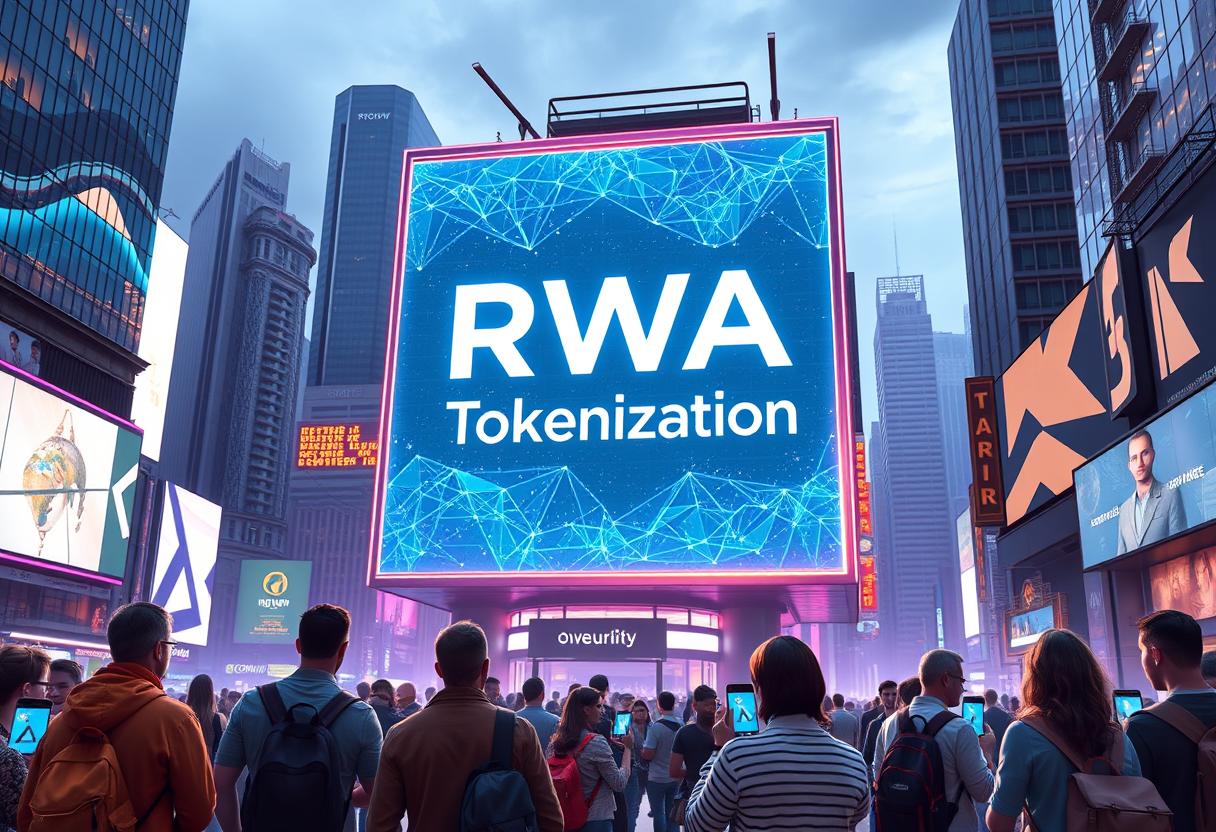
The Future of Finance- Why RWA Tokenization is the Next Big Thing in DeFi
The financial landscape is undergoing a seismic shift, and at the heart of this transformation lies Real World Asset (RWA) tokenization. As decentralized finance (DeFi) continues to redefine how we interact with money, RWAs are emerging as a revolutionary force, bridging the gap between traditional finance and blockchain technology. We see this as more than just a trend—it’s a fundamental evolution that promises to democratize access to wealth, enhance liquidity, and reshape investment opportunities for individuals and institutions alike. By converting tangible assets like real estate, art, and commodities into digital tokens on a blockchain, RWA tokenization is unlocking unprecedented potential in the DeFi ecosystem.
This article delves deep into why RWA tokenization is poised to become the next big thing in DeFi. We explore its mechanics, its impact on financial inclusivity, and the practical advantages it offers over conventional systems. With insights from industry experts and a clear-eyed look at its real-world applications, we aim to provide a comprehensive understanding of this game-changing innovation.
Understanding RWA Tokenization: A New Financial Frontier
RWA tokenization refers to the process of representing ownership of physical or tangible assets as digital tokens on a blockchain. Imagine a luxury apartment in New York or a rare piece of artwork—assets traditionally reserved for the wealthy elite. Through tokenization, these can be fractionalized into smaller, affordable units, allowing everyday investors to own a piece of the pie. We’re talking about a system where a $1 million property could be split into 10,000 tokens, each worth $100, tradable on a decentralized platform.
What makes this so compelling is the use of blockchain technology, which ensures transparency, immutability, and security. Every transaction is recorded on a public ledger, eliminating the need for intermediaries like banks or brokers. This not only reduces costs but also speeds up processes that once took days or weeks. For instance, settling a real estate deal typically involves layers of paperwork and fees. With tokenized RWAs, ownership can change hands in minutes, all verified by smart contracts—self-executing agreements coded into the blockchain.
Dr. Jane Thompson, a blockchain economist at Stanford University, explains, “Tokenizing real-world assets is like putting traditional finance on steroids. It combines the stability of physical assets with the efficiency and accessibility of digital systems.” We see this fusion as the cornerstone of DeFi’s next phase, where the lines between tangible wealth and digital innovation blur.
Why RWA Tokenization Matters in DeFi
DeFi has already disrupted finance by offering decentralized lending, borrowing, and trading without traditional gatekeepers. However, its reliance on volatile cryptocurrencies like Ethereum or Bitcoin has limited its appeal to mainstream investors. RWAs address this gap by bringing stable, real-world value into the ecosystem. We’re witnessing a shift where DeFi isn’t just a speculative playground but a practical tool for wealth creation.
Consider liquidity, a perennial challenge in traditional markets. Selling a property or a high-value collectible often takes months, tying up capital and limiting flexibility. Tokenized assets, by contrast, can be traded 24/7 on global DeFi platforms, providing instant liquidity. This opens doors for smaller investors who previously couldn’t participate in such markets due to high entry barriers. A farmer in Brazil, for example, could tokenize their land and sell fractions to investors worldwide, raising capital without losing full ownership.
Moreover, RWAs enhance portfolio diversification. Investors can now mix cryptocurrencies with tokenized stocks, bonds, or even intellectual property, balancing risk and reward. We believe this versatility is what positions RWA tokenization as a catalyst for DeFi’s mass adoption, appealing to both crypto enthusiasts and traditional finance veterans.
The Mechanics of RWA Tokenization: How It Works
To grasp the power of RWA tokenization, we need to break down its process. First, an asset is appraised and legally structured—say, a commercial building worth $5 million. Next, a digital token is created, typically on a blockchain like Ethereum, representing fractional ownership. These tokens comply with standards like ERC-20, ensuring interoperability across DeFi platforms. Smart contracts then govern the issuance, trading, and redemption of these tokens, embedding rules like profit distribution or voting rights.
Here’s where it gets interesting: the asset’s value is tied to its real-world performance. If the building generates $200,000 in annual rent, token holders receive proportional dividends. This tangible backing contrasts with many crypto projects that lack intrinsic value. We see this as a trust-building mechanism, making RWAs a safer bet for cautious investors entering DeFi.
Bridging Financial Inclusion with RWAs
One of the most transformative aspects of RWA tokenization is its potential to level the playing field. In many parts of the world, access to investment opportunities is restricted by wealth, geography, or bureaucracy. We’re excited by how tokenization dismantles these barriers. A teacher in Kenya, for instance, could invest $50 in tokenized real estate in London, something unimaginable in the pre-blockchain era.
This inclusivity extends to asset owners as well. Small businesses or individuals with valuable but illiquid assets—like machinery or patents—can tokenize them to raise funds without bank loans. “It’s a lifeline for underserved communities,” says Michael Okoro, a fintech entrepreneur based in Lagos. “Tokenization turns dormant wealth into active capital.” We share his optimism, seeing RWAs as a tool to empower millions excluded from global finance.
Challenges and Risks: A Balanced Perspective
While the promise of RWA tokenization is immense, we must acknowledge its hurdles. Regulatory uncertainty tops the list. Governments are still grappling with how to classify and tax tokenized assets, creating a gray area that could deter adoption. Legal disputes over ownership or fraud could also complicate matters, especially if assets are misrepresented.
Technical risks persist too. Smart contracts, while efficient, aren’t foolproof—coding errors or hacks could jeopardize funds. Additionally, the reliance on oracles (external data feeds linking real-world value to tokens) introduces vulnerabilities. If an oracle fails, the token’s value could disconnect from its asset, eroding trust.
Despite these challenges, we’re confident that ongoing advancements—like stricter compliance frameworks and more robust blockchain security—will mitigate these risks, paving the way for RWAs to thrive.
Real-World Examples: RWAs in Action
The impact of RWA tokenization is already visible. Platforms like Harbor and Polymath are tokenizing real estate, while Centrifuge enables businesses to tokenize invoices for financing. In 2023, a Miami condo was tokenized and sold as 1,000 fractional shares, raising $1.2 million in under 48 hours. We find these cases inspiring, as they demonstrate how RWAs translate theory into practice.
Art tokenization is another frontier. Masterworks, for example, lets users buy shares in multimillion-dollar paintings. A Picasso worth $20 million, once a collector’s trophy, can now be co-owned by hundreds via tokens. We see this as a democratization of luxury, aligning perfectly with DeFi’s ethos.
Expert Opinion: The Road Ahead
We reached out to Sarah Lin, a DeFi analyst with over a decade in blockchain research, for her take. “RWA tokenization is the bridge that traditional finance needs to cross into DeFi,” she says. “By 2030, I predict tokenized assets will account for 10% of global GDP, driven by institutional adoption.” Her forecast underscores our belief that RWAs aren’t a fleeting hype but a foundational shift.
Final Thoughts: Embracing the Tokenized Future
As we look to the horizon, RWA tokenization stands out as a beacon of innovation in DeFi. It marries the stability of real-world assets with the agility of blockchain, offering a compelling alternative to both crypto volatility and traditional finance’s rigidity. We’re convinced that its ability to unlock liquidity, foster inclusion, and redefine ownership will cement its place as the next big thing. For investors, businesses, and dreamers alike, the tokenized future is not just coming—it’s here, and it’s ours to shape.
Stay informed with daily updates from Blockchain Magazine on Google News. Click here to follow us and mark as favorite: [Blockchain Magazine on Google News].
Disclaimer
Blockchain Magazine publishes content submitted by third-party agencies, partners, and clients. Any such posts are categorized and tagged accordingly:
- Sponsored Content: Posts labeled as "Sponsored" are paid placements submitted by third-party agencies or clients. Blockchain Magazine does not endorse or express any views regarding the information contained in these posts. The opinions expressed belong solely to the respective authors and do not reflect the official policy or position of Blockchain Magazine.
- Press Releases: Posts labeled as "Press Release" are paid PR submissions provided by our partners and clients. These are published as received and should be considered as promotional content.
The information provided in such posts is strictly for informational purposes only and should not be interpreted as financial, investment, or professional advice. Blockchain Magazine does not recommend, endorse, or promote any specific products, services, or companies mentioned. Readers are strongly encouraged to conduct independent research and consult with a qualified professional before making any financial or investment decisions.
Additionally, all featured images accompanying such posts are intended as creative depictions of the subject matter. There is no intent to offend or misrepresent any individual, institution, or entity. If any content or imagery is found to be objectionable, please reach out to us at [email protected], and we will promptly review the concern.
About the Author: Veronica Cruz




Get Blockchain Insights In Inbox
Stay ahead of the curve with expert analysis and market updates.