
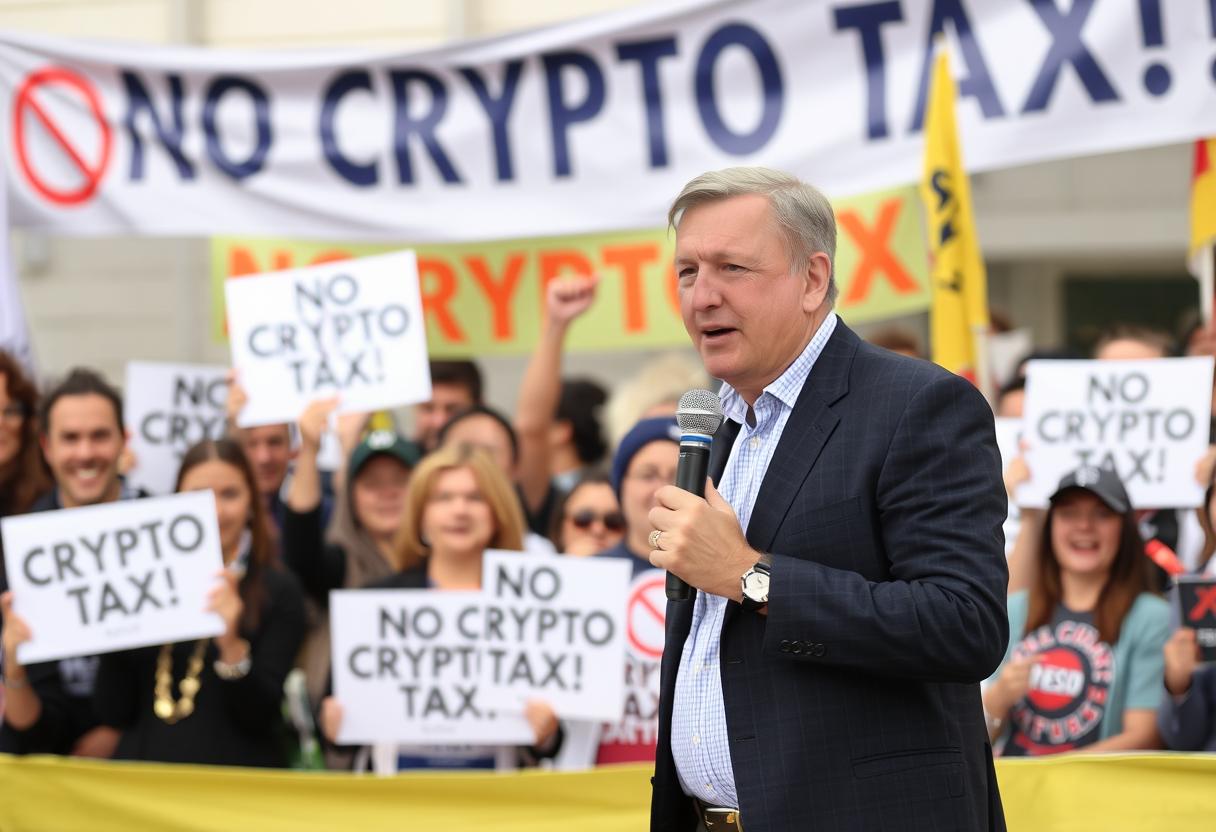
No Crypto Tax: The Bold Move That’s Shaking Up the Financial Industry
A Shockwave Through the Crypto Universe!
The cryptocurrency industry is no stranger to controversy, but the latest development from the White House is sending shockwaves through the financial world. In a move that could redefine the future of digital assets, the U.S. government has rejected a proposal to impose a transaction tax on cryptocurrency. This decision has sparked heated debates, with some celebrating it as a victory for financial freedom, while others question how the government will make up for lost revenue.
The idea of taxing every crypto transaction was introduced on the All In Podcast, where host Jason Calacanis proposed a 0.01% fee on each digital asset transfer. White House crypto and AI czar David Sacks quickly dismissed the suggestion, warning that even the smallest taxes have a way of growing into something much bigger. Citing historical examples, he compared it to the early days of income tax in America, which initially applied to only a few individuals before expanding into a nationwide obligation.
This rejection is more than just a policy stance; it could be the start of a radical shift in financial governance. With President Trump’s administration pushing for sweeping tax reforms, including potentially replacing federal income tax with tariffs on imported goods, the U.S. could be heading toward an unprecedented economic transformation.
No Crypto Tax: A Massive Boost for Digital Finance
For years, the crypto industry has battled regulatory uncertainty, with governments worldwide struggling to define how digital assets should be taxed and controlled. The decision to forgo a transaction tax could create a ripple effect across financial markets, accelerating the adoption of blockchain technology and making the U.S. a prime destination for crypto investment.
The benefits of a tax-free crypto market are substantial. Without the added burden of taxation on every transaction, trading volumes are expected to surge, making the market more liquid and efficient. More businesses may now consider integrating cryptocurrency payments, leading to wider adoption of digital assets in everyday transactions.
Investors, both retail and institutional, stand to benefit significantly. The absence of a transaction tax means lower costs for frequent traders and long-term holders alike. Crypto startups and blockchain enterprises could find the U.S. an even more attractive hub for innovation, drawing capital and talent into the sector. This decision could reshape the entire digital economy, positioning America at the forefront of the blockchain revolution.
Could This Be the Beginning of the End for Income Taxes?
While the rejection of a crypto transaction tax is significant, the bigger story lies in the larger economic vision that is unfolding. Former President Donald Trump has repeatedly advocated for eliminating federal income taxes altogether, proposing that revenue could instead be generated through tariffs on imports. Commerce Secretary Howard Lutnick has echoed this idea, suggesting that the IRS be replaced with an “External Revenue Service” focused on collecting tariffs rather than taxing individual citizens.
This radical proposal could completely reshape how the U.S. government funds itself. According to research from accounting automation firm Dancing Numbers, if income taxes were abolished, the average American could save a staggering $134,809 over their lifetime. If state income taxes were also repealed, these savings could balloon to $325,561 per person.
Such a transformation could have profound implications for both individuals and businesses. With more money staying in the pockets of citizens, consumer spending could see a massive boost, leading to economic expansion. Businesses, freed from income tax burdens, could reinvest in growth, job creation, and innovation. The stock market could thrive as investors redirect their tax savings into investments, fueling further economic momentum.
The World Watches: Will Other Countries Follow Suit?
The decision to reject a crypto transaction tax could put pressure on other governments to reconsider their approach to digital assets. Countries like Switzerland, Singapore, and the UAE have already established themselves as crypto-friendly jurisdictions, offering clear regulations and minimal taxation to attract blockchain enterprises.
If the U.S. fully embraces this pro-crypto, low-tax approach, it could trigger a global shift in financial policy. Nations that impose heavy taxes on digital assets may struggle to retain businesses and investors, potentially leading to a wave of tax policy revisions worldwide.
However, this also raises concerns about how governments will fund essential services without traditional tax revenue. If tariffs become the primary source of income, could they drive up consumer prices? Would higher import taxes lead to inflation? While the promise of a tax-free financial landscape is exciting, it also presents new challenges that policymakers must address.
The Critics Weigh In: Risks and Challenges of a Tax-Free Crypto Market
Not everyone is convinced that eliminating crypto transaction taxes is a good idea. Critics argue that without taxation, the government could struggle to regulate the rapidly growing digital asset market effectively. Some believe that a small, well-structured tax could provide much-needed funding for oversight and consumer protection, ensuring that investors are safeguarded against fraud and manipulation. There are also concerns about how this policy shift could impact economic inequality. Without income tax revenue, the government may have fewer resources to fund social programs, infrastructure, and education, potentially widening the wealth gap. Some experts warn that higher tariffs on imports could disproportionately affect middle- and lower-income households, as increased costs on goods and services may offset the savings from an income tax repeal.
Additionally, without crypto transaction taxes, will governments be able to track and prevent illicit financial activities? Regulatory bodies often rely on tax reporting to monitor financial transactions, and some fear that a completely tax-free crypto economy could encourage money laundering and tax evasion.
Final thought: The Future of Finance Is Changing FAST!
The White House’s rejection of a crypto transaction tax is more than just a policy decision—it is the first step in what could be a complete transformation of the U.S. financial system.
By refusing to tax digital asset transactions, the government is signaling a commitment to fostering crypto innovation, attracting investors, and driving mass adoption. The broader push to eliminate income tax and replace it with tariffs could further accelerate this shift, creating an entirely new economic structure that prioritizes financial freedom and growth. However, this decision also raises important questions. How will the government replace lost revenue? Will increased tariffs create unintended economic consequences? Can regulators maintain control over the crypto market without taxation?
One thing is certain—this is just the beginning. The choices made today will shape the future of digital assets, taxation, and economic policy for decades to come. As crypto continues to evolve, governments, investors, and businesses must adapt to a rapidly changing financial landscape. The crypto tax-free revolution is here, and the world is watching closely to see where it leads.
Stay informed with daily updates from Blockchain Magazine on Google News. Click here to follow us and mark as favorite: [Blockchain Magazine on Google News].
Disclaimer
Blockchain Magazine publishes content submitted by third-party agencies, partners, and clients. Any such posts are categorized and tagged accordingly:
- Sponsored Content: Posts labeled as "Sponsored" are paid placements submitted by third-party agencies or clients. Blockchain Magazine does not endorse or express any views regarding the information contained in these posts. The opinions expressed belong solely to the respective authors and do not reflect the official policy or position of Blockchain Magazine.
- Press Releases: Posts labeled as "Press Release" are paid PR submissions provided by our partners and clients. These are published as received and should be considered as promotional content.
The information provided in such posts is strictly for informational purposes only and should not be interpreted as financial, investment, or professional advice. Blockchain Magazine does not recommend, endorse, or promote any specific products, services, or companies mentioned. Readers are strongly encouraged to conduct independent research and consult with a qualified professional before making any financial or investment decisions.
Additionally, all featured images accompanying such posts are intended as creative depictions of the subject matter. There is no intent to offend or misrepresent any individual, institution, or entity. If any content or imagery is found to be objectionable, please reach out to us at [email protected], and we will promptly review the concern.
About the Author: Peter Raid





Get Blockchain Insights In Inbox
Stay ahead of the curve with expert analysis and market updates.