

What Is XRP Crypto? The Crypto Powering Ripple Explained!
Understanding XRP Crypto
The Role of XRP in Ripple’s Ecosystem
Okay, so what’s XRP all about? Well, it’s basically the digital currency that powers Ripple’s whole system. Think of Ripple as a tech company trying to make international money transfers faster and cheaper. XRP is the crypto asset they use to do it. It’s designed to be a bridge between different currencies, making it easier for banks and payment providers to move money around the world. Ripple was established in 2004, even before the crypto craze, with the goal of improving global payment systems.
Key Features of XRP
So, what makes XRP special? Here’s a few things:
- Speed: XRP transactions are super fast, usually settling in just a few seconds. This is way quicker than traditional methods, which can take days.
- Low Cost: The transaction fees are tiny, like fractions of a penny. This makes it attractive for large-scale payments.
- Scalability: The XRP Ledger can handle a lot of transactions at once, making it suitable for global use.
XRP acts as a go-between for currencies, cutting out the need for direct exchanges. This speeds up international transactions and reduces processing times significantly. Banks are already using XRP for routine transfers.
Market Position and Value
XRP is a big player in the crypto world. It’s consistently ranked among the top cryptocurrencies by market capitalization. As of today, XRP holds a spot among the top 10 largest crypto assets. Its value, of course, fluctuates like any other cryptocurrency, but it’s generally seen as a stable and reliable digital asset. The price is affected by a bunch of things, like overall market trends, news about Ripple, and regulatory developments. Ripple acquired crypto businesses Metaco and Fortress Trust in 2023, aiming to improve customer experience.
Ripple’s Mission and Vision
History of Ripple
So, Ripple started way back in 2012, but it wasn’t always called Ripple. It went through a couple of name changes before settling on Ripple Labs Inc. What’s interesting is that, unlike a lot of crypto projects that wanted to overthrow the banking system, Ripple was designed to work with those existing financial institutions. They wanted to improve things, not tear them down. Ripple’s initial mission was to enhance payment settlement systems for global transactions. They acquired Ripplepay from Fugger and repurposed its source code to create the XRP Ledger.
RippleNet Explained
RippleNet is the real innovation here. It’s basically a network that allows for super-fast international money transfers. We’re talking near-instantaneous. It connects banks, payment providers, and exchanges, so they can process transactions quickly and cheaply. It’s meant to replace SWIFT, one of the largest money transfer networks. RippleNet facilitates currency exchange spanning fiat, cryptocurrencies like Bitcoin, and commodities such as gold.
Partnerships and Collaborations
Ripple has been working hard to get different players on board. They’ve partnered with a bunch of banks and financial institutions to use RippleNet. These partnerships are key to getting Ripple’s technology adopted more widely. It’s all about building a network effect, where the more participants there are, the more useful the network becomes. These collaborations help Ripple expand its reach and demonstrate the real-world applications of its technology.
Ripple’s approach is pretty strategic. Instead of trying to compete directly with established financial systems, they’re trying to improve them. This makes it easier for banks and other institutions to adopt their technology, which could lead to wider use of XRP and RippleNet.
Exploring the XRP Ledger
How the XRP Ledger Works
The XRP Ledger (XRPL) is where all the magic happens. It’s a decentralized cryptographic ledger, meaning it’s not controlled by one single entity. Instead, it relies on a network of computers to verify and record transactions. Think of it as a super transparent and secure database. Unlike Bitcoin, which uses a lot of computing power for validation, XRPL has a different approach. It was created by repurposing Ripplepay’s source code, expanding upon Bitcoin’s concept.
Consensus Mechanism
Instead of mining, the XRPL uses a unique consensus mechanism. It relies on trusted nodes to validate transactions. These nodes maintain a list of other trusted nodes, and when a transaction occurs, these nodes vote on its validity. If 80% of the nodes agree, the transaction is validated and added to the ledger. This makes the process much faster and more energy-efficient than traditional blockchain systems. However, it’s not without its challenges. Out-of-sync issues and node compromise can slow down the network.
Transaction Speed and Efficiency
One of the biggest advantages of the XRP Ledger is its speed. Transactions are typically confirmed in just a few seconds, making it much faster than Bitcoin or even some traditional payment systems. This speed is due to the consensus mechanism, which allows for quick validation of transactions. Plus, the fees are super low, usually just fractions of a penny. This makes it an attractive option for cross-border payments and other applications where speed and cost are important. The XRP’s price is projected to reach $3, highlighting its potential for significant growth in the market.
The XRPL was designed to be a fast, efficient, and reliable platform for payments. Its unique consensus mechanism and low fees make it a compelling alternative to traditional payment systems.
Ripple’s Legal Challenges
Overview of the SEC Lawsuit
The legal battle between Ripple and the SEC has been a major talking point in the crypto world. It all started when the SEC claimed that Ripple’s sales of XRP were unregistered securities offerings. This wasn’t just a minor issue; it questioned the very nature of XRP and its place in the market. The lawsuit alleged that Ripple had raised over $1.3 billion through these sales. The core of the SEC’s argument was that XRP should have been registered as a security, which would have required Ripple to provide investors with detailed financial disclosures. This legal action has had a ripple effect (pun intended) across the entire cryptocurrency industry, raising questions about how digital assets are regulated and classified. It’s a complex situation with no easy answers, and the outcome could set precedents for future crypto regulations. Understanding Ripple’s SEC case is key to understanding XRP’s future.
Impact on XRP’s Market Value
The SEC lawsuit had a direct and significant impact on XRP’s market value. When the lawsuit was first announced, the price of XRP plummeted. Many exchanges, including some of the largest in the US, delisted XRP to avoid potential legal issues. This made it harder for investors to buy and sell XRP, further driving down its price. The uncertainty surrounding the lawsuit created a climate of fear and speculation, leading to increased volatility. Even positive developments in the case, such as favorable rulings for Ripple, only provided temporary boosts to the price. The long-term effects of the lawsuit are still being felt, as XRP’s market value remains sensitive to any news or updates related to the legal proceedings. The price of XRP is influenced by:
- Legal Rulings
- Market Sentiment
- Exchange Listings
Future Implications for Ripple
The outcome of Ripple’s legal challenges will have far-reaching implications for the company and the broader crypto industry. A favorable ruling could validate Ripple’s business model and pave the way for increased adoption of XRP. It could also provide clarity on the regulatory status of other cryptocurrencies, potentially attracting more institutional investment. However, an unfavorable ruling could severely restrict Ripple’s operations and cast a shadow over the future of XRP. It might also embolden regulators to take a stricter approach to other digital assets. Regardless of the outcome, the lawsuit has already forced Ripple to adapt its strategies and explore new markets. The company has been actively expanding its partnerships and focusing on cross-border payments solutions, positioning itself to thrive even in a challenging regulatory environment. Ripple’s ability to innovate and adapt will be crucial in navigating the uncertainties ahead.
The legal battle has highlighted the need for clearer regulations in the crypto space. It’s a wake-up call for lawmakers to establish a framework that protects investors while fostering innovation. The future of XRP and other cryptocurrencies depends on finding a balance between regulation and freedom.
XRP and Ripple: Key Differences
Understanding Their Distinct Roles
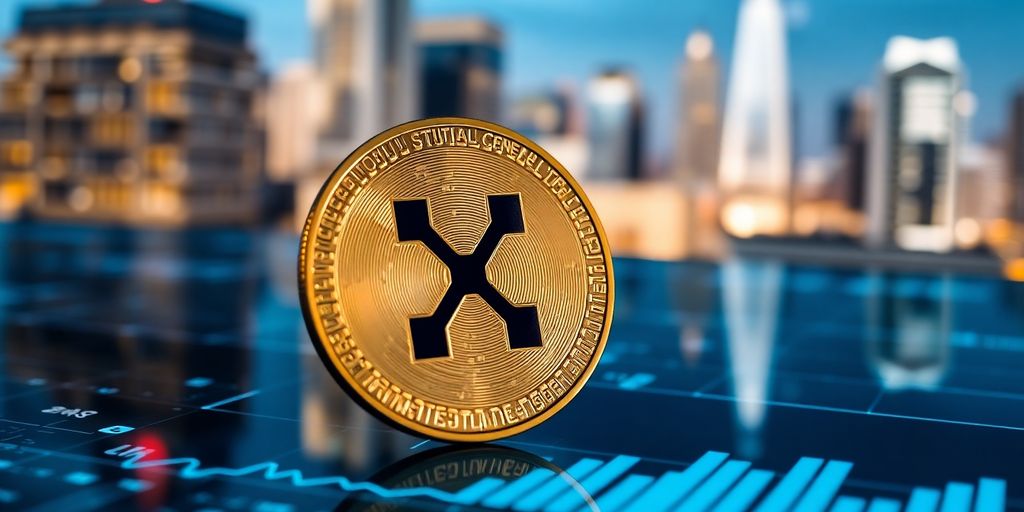
It’s easy to get XRP and Ripple mixed up, but they aren’t exactly the same thing. Think of it this way: Ripple is the company, and XRP is the digital asset that runs on the XRP Ledger. Ripple uses XRP to facilitate faster and cheaper international payments. Ripple, the company, develops and promotes the use of XRP, but the XRP Ledger itself is decentralized. It’s kind of like how Google develops Android, but Android is an open-source operating system used by many different phone manufacturers.
How They Interact
Ripple uses XRP in its products, like On-Demand Liquidity (ODL), to help bridge different currencies. When someone wants to send money from one country to another, ODL can use XRP as a go-between to speed up the transaction and lower costs. RippleNet explained how this works. It’s important to note that while Ripple heavily relies on XRP, the XRP Ledger can function independently. Other companies and developers can also build applications on the XRP Ledger without necessarily involving Ripple directly.
Common Misconceptions
One of the biggest misconceptions is that Ripple is XRP. They are related, but distinct. Another common mistake is thinking that Ripple controls the XRP Ledger entirely. While Ripple created it, the ledger is decentralized, meaning no single entity controls it.
It’s also a mistake to assume that XRP’s success is entirely dependent on Ripple’s success. While Ripple’s adoption of XRP is a major factor, the XRP Ledger’s technology has potential uses beyond Ripple’s specific applications. The environmental sustainability of XRP is also a factor.
Here’s a quick breakdown:
- Ripple: A fintech company.
- XRP: A digital asset.
- XRP Ledger: A decentralized blockchain technology.
The Future of XRP Crypto
Potential for Adoption
Okay, so what’s next for XRP? Well, a lot of people are watching to see if it’ll get adopted more widely. Adoption is key, right? If more financial institutions start using XRP for cross-border payments, that could really boost its value. Think about it: faster, cheaper transactions? That’s what everyone wants. But it’s not just about banks. If more businesses start accepting XRP as payment, that could also be a game-changer. It all comes down to whether people see it as a useful tool.
Challenges Ahead
It’s not all sunshine and roses, though. XRP faces some pretty big challenges. The biggest one? Regulation. Governments around the world are still trying to figure out how to regulate crypto, and that uncertainty can scare off investors. The ongoing legal battle with the SEC is also a major hurdle. Plus, there’s competition from other cryptocurrencies and traditional payment systems. XRP needs to prove that it can stand out from the crowd and offer something unique. It’s a tough market out there.
Predictions for Market Growth
Predicting the future of any cryptocurrency is like trying to predict the weather, but here’s the deal: some analysts are pretty optimistic about XRP. They think that if Ripple wins its legal battle and XRP gets more widely adopted, its price could skyrocket. Others are more cautious, pointing to the risks and uncertainties. Ultimately, it’s anyone’s guess. But one thing’s for sure: the next few years will be crucial for XRP. Keep an eye on leading investment opportunity and see how things play out.
It’s important to remember that investing in crypto is risky. Don’t invest more than you can afford to lose, and always do your own research before making any decisions.
Stay informed with daily updates from Blockchain Magazine on Google News. Click here to follow us and mark as favorite: [Blockchain Magazine on Google News].
Disclaimer
Blockchain Magazine publishes content submitted by third-party agencies, partners, and clients. Any such posts are categorized and tagged accordingly:
- Sponsored Content: Posts labeled as "Sponsored" are paid placements submitted by third-party agencies or clients. Blockchain Magazine does not endorse or express any views regarding the information contained in these posts. The opinions expressed belong solely to the respective authors and do not reflect the official policy or position of Blockchain Magazine.
- Press Releases: Posts labeled as "Press Release" are paid PR submissions provided by our partners and clients. These are published as received and should be considered as promotional content.
The information provided in such posts is strictly for informational purposes only and should not be interpreted as financial, investment, or professional advice. Blockchain Magazine does not recommend, endorse, or promote any specific products, services, or companies mentioned. Readers are strongly encouraged to conduct independent research and consult with a qualified professional before making any financial or investment decisions.
Additionally, all featured images accompanying such posts are intended as creative depictions of the subject matter. There is no intent to offend or misrepresent any individual, institution, or entity. If any content or imagery is found to be objectionable, please reach out to us at [email protected], and we will promptly review the concern.
About the Author: Lily Thompson




Get Blockchain Insights In Inbox
Stay ahead of the curve with expert analysis and market updates.