
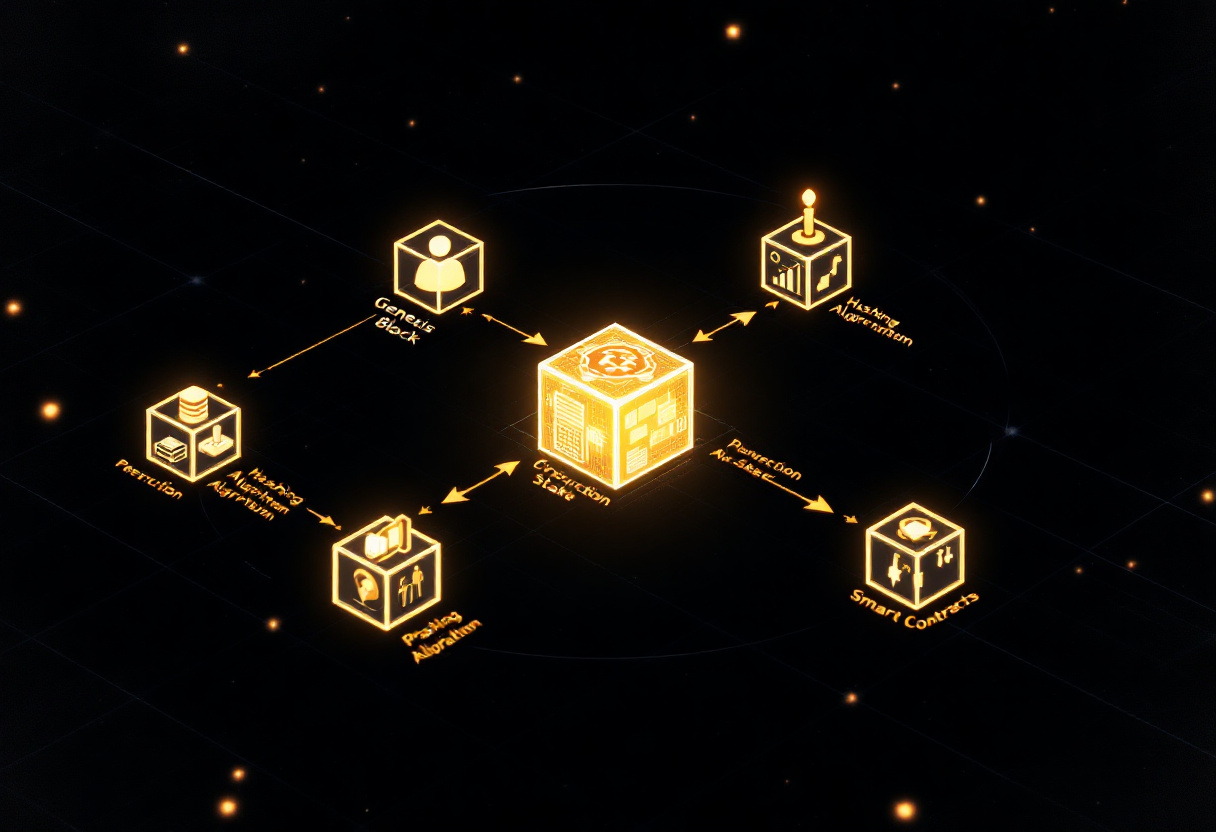
Breaking Down Blockchain Protocols: The Heart of a Decentralized Revolution
The world of technology is undergoing a seismic shift, and at the epicenter of this transformation lies blockchain—a revolutionary system that promises to redefine trust, security, and decentralization. Blockchain protocols, the foundational frameworks that power this innovation, are more than just technical constructs; they are the beating heart of a decentralized revolution. From cryptocurrencies like Bitcoin to supply chain transparency and beyond, blockchain protocols are reshaping industries and challenging traditional systems. In this article, we’ll dive deep into what blockchain protocols are, how they work, and why they matter in today’s rapidly evolving digital landscape.
What Are Blockchain Protocols?
At its core, a blockchain protocol is a set of rules and standards that govern how a blockchain network operates. Think of it as the instruction manual that ensures every participant in the network—whether a computer, a miner, or a user—follows the same playbook. These protocols dictate how data is recorded, verified, and shared across a decentralized ledger, ensuring transparency and immutability without the need for a central authority.
Blockchain protocols are built on cryptographic principles and consensus mechanisms, which allow a distributed network of nodes (computers) to agree on the validity of transactions. Bitcoin’s protocol, for instance, introduced the world to the concept of a decentralized digital currency, while Ethereum expanded the scope by enabling smart contracts—self-executing agreements coded directly into the blockchain. Each protocol is unique, tailored to specific use cases, yet they all share a common goal: decentralization.
The Building Blocks of Blockchain Protocols
To understand blockchain protocols, it’s essential to break down their key components. These elements work in harmony to create a secure, trustless system that operates without intermediaries.
1. Distributed Ledger
The distributed ledger is the backbone of any blockchain. Unlike traditional databases controlled by a single entity, a blockchain ledger is replicated across all nodes in the network. Every transaction is recorded in a “block,” and these blocks are linked chronologically to form a “chain.” Once a block is added, it’s nearly impossible to alter, ensuring data integrity.
2. Consensus Mechanisms
Consensus mechanisms are the rules that ensure all nodes agree on the state of the blockchain. The most well-known is Proof of Work (PoW), used by Bitcoin, where miners solve complex mathematical puzzles to validate transactions and earn rewards. Ethereum, meanwhile, has transitioned to Proof of Stake (PoS), a more energy-efficient method where validators stake their cryptocurrency to secure the network. Other mechanisms, like Delegated Proof of Stake (DPoS) and Practical Byzantine Fault Tolerance (PBFT), cater to different needs, balancing speed, security, and scalability.
3. Cryptography
Cryptography is the shield that protects blockchain protocols. Public and private key pairs secure transactions, ensuring only authorized parties can access or transfer assets. Hashing algorithms, like SHA-256, link blocks together, making tampering evident. This cryptographic foundation is what makes blockchain a fortress of trust in an otherwise untrustworthy digital world.
4. Smart Contracts
Introduced by Ethereum, smart contracts are programmable agreements that execute automatically when predefined conditions are met. They eliminate intermediaries in processes like real estate deals, insurance claims, or even voting systems, making blockchain protocols versatile beyond just financial transactions.
read more :Breaking Down Borders: Blockchain and Crypto’s Role in Future Global Payments
Why Blockchain Protocols Matter
Blockchain protocols are more than a technological curiosity—they’re a paradigm shift. By removing the need for centralized control, they empower individuals, reduce costs, and enhance security. Here’s why they’re driving a decentralized revolution:
1. Trust Without Intermediaries
In traditional systems, banks, governments, or corporations act as trusted middlemen. Blockchain protocols replace this with cryptographic trust. For example, when you send Bitcoin, the protocol ensures the transaction is valid—no bank required. This disintermediation is a game-changer for industries reliant on trust.
2. Transparency and Accountability
Every transaction on a public blockchain is visible to all participants, creating unparalleled transparency. Supply chains, for instance, can use blockchain to track goods from origin to destination, reducing fraud and ensuring ethical sourcing. Companies like IBM and Walmart are already leveraging this capability.
3. Resilience and Security
Decentralization makes blockchain protocols incredibly resilient. There’s no single point of failure—hack one node, and the network remains intact. Coupled with cryptographic security, this makes blockchain a robust solution for everything from financial systems to healthcare records.
The Evolution of Blockchain Protocols
Blockchain technology is not static; it’s evolving rapidly. Bitcoin’s protocol, launched in 2009, was groundbreaking but limited to peer-to-peer payments. Ethereum, introduced in 2015, expanded the horizon with smart contracts, birthing decentralized applications (dApps). Today, newer protocols like Polkadot and Cosmos aim to solve interoperability, allowing different blockchains to communicate seamlessly.
Scalability remains a challenge, with protocols like Solana and Avalanche pushing the boundaries of transaction speed and cost-efficiency. Meanwhile, environmental concerns—particularly around PoW’s energy consumption—have spurred greener alternatives like PoS. The evolution of blockchain protocols reflects a relentless drive to balance security, scalability, and sustainability.
Real-World Impact: Beyond Cryptocurrency
While cryptocurrencies dominate headlines, blockchain protocols are quietly revolutionizing other sectors. In finance, decentralized finance (DeFi) platforms use protocols like Ethereum to offer lending, borrowing, and trading without banks. In healthcare, patient records can be securely stored and shared across institutions. Even governments are exploring blockchain for secure voting systems and transparent public records.
Take the example of Estonia, a pioneer in blockchain adoption. Its e-governance system uses blockchain protocols to secure citizen data, proving that decentralization can scale to national levels. Similarly, artists are using protocols like Tezos to create and sell non-fungible tokens (NFTs), redefining digital ownership.
The Future of Blockchain Protocols
The decentralized revolution is just beginning. As blockchain protocols mature, they’ll likely integrate with emerging technologies like artificial intelligence and the Internet of Things (IoT). Imagine smart cities where IoT devices settle transactions on a blockchain, or AI systems using decentralized data for unbiased decision-making.
Challenges remain—regulatory uncertainty, scalability bottlenecks, and user adoption hurdles—but the potential is undeniable. Protocols will continue to evolve, becoming more user-friendly and efficient, paving the way for a world where decentralization is the norm, not the exception.
Conclusion: A New Era of Possibility
Blockchain protocols are the unsung heroes of the decentralized revolution. They’re not just code; they’re a blueprint for a future where power is distributed, trust is inherent, and intermediaries are obsolete. From empowering individuals to transforming industries, these protocols are rewriting the rules of engagement in the digital age. As we stand on the cusp of this transformation, one thing is clear: blockchain protocols are not just the heart of a revolution—they’re the pulse of a new era.
Stay informed with daily updates from Blockchain Magazine on Google News. Click here to follow us and mark as favorite: [Blockchain Magazine on Google News].
Disclaimer
Blockchain Magazine publishes content submitted by third-party agencies, partners, and clients. Any such posts are categorized and tagged accordingly:
- Sponsored Content: Posts labeled as "Sponsored" are paid placements submitted by third-party agencies or clients. Blockchain Magazine does not endorse or express any views regarding the information contained in these posts. The opinions expressed belong solely to the respective authors and do not reflect the official policy or position of Blockchain Magazine.
- Press Releases: Posts labeled as "Press Release" are paid PR submissions provided by our partners and clients. These are published as received and should be considered as promotional content.
The information provided in such posts is strictly for informational purposes only and should not be interpreted as financial, investment, or professional advice. Blockchain Magazine does not recommend, endorse, or promote any specific products, services, or companies mentioned. Readers are strongly encouraged to conduct independent research and consult with a qualified professional before making any financial or investment decisions.
Additionally, all featured images accompanying such posts are intended as creative depictions of the subject matter. There is no intent to offend or misrepresent any individual, institution, or entity. If any content or imagery is found to be objectionable, please reach out to us at [email protected], and we will promptly review the concern.
About the Author: Veronica Cruz





Get Blockchain Insights In Inbox
Stay ahead of the curve with expert analysis and market updates.