
Breaking the Blockchain Trilemma: New Solutions for Decentralized Scalability
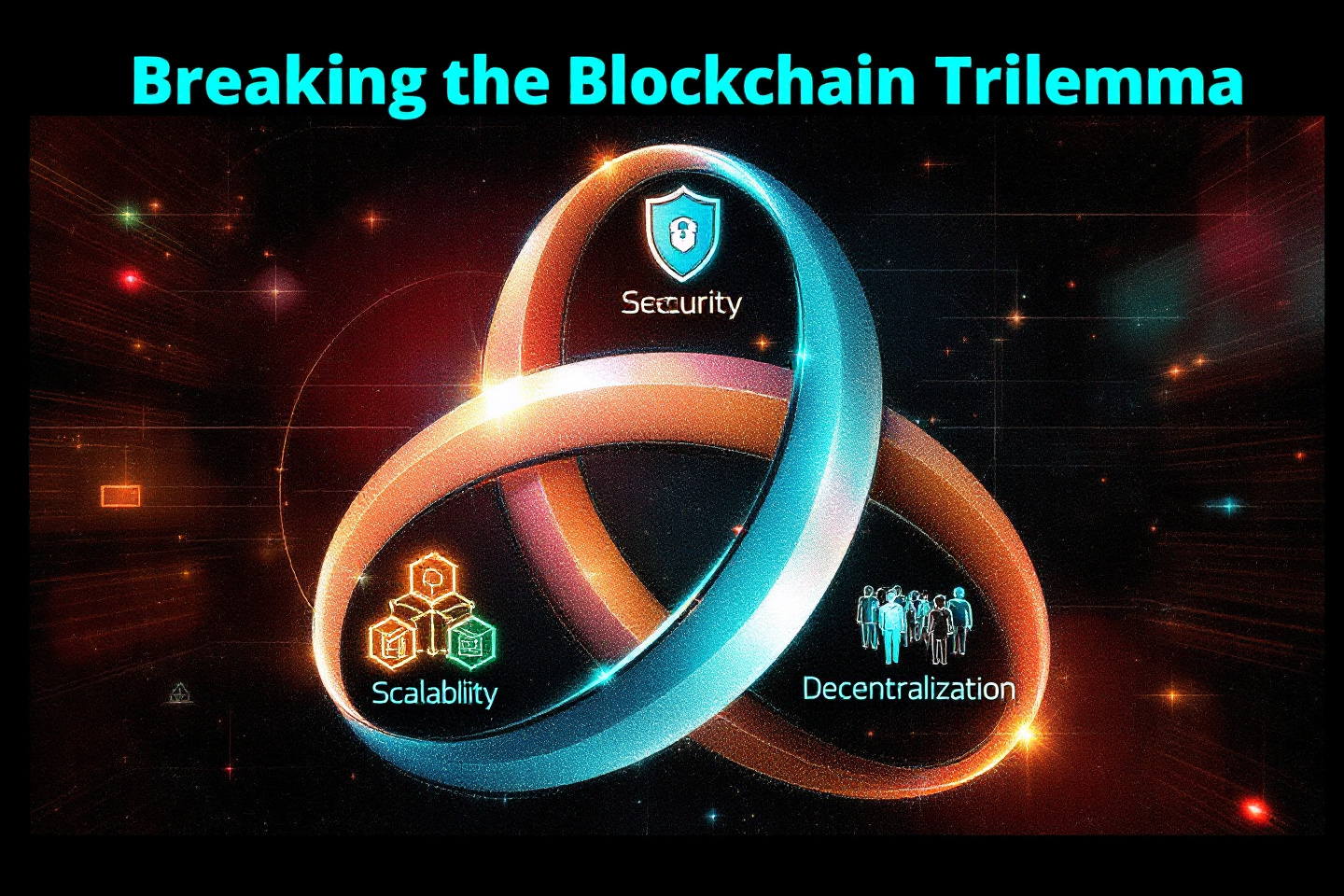
Blockchain technology has revolutionized digital transactions, introducing decentralized systems that prioritize transparency, security, and immutability. However, at its core, blockchain faces a fundamental challenge—the blockchain trilemma. This term, coined by Ethereum co-founder Vitalik Buterin, describes the difficulty of balancing three key elements: decentralization, security, and scalability. Traditionally, optimizing two of these attributes often comes at the cost of the third. But what if we could break this limitation? Let’s dive into how the latest innovations are solving the blockchain trilemma and shaping the future of decentralized technology.
Understanding the Blockchain Trilemma
To grasp the significance of the trilemma, let’s define its three pillars:
- Decentralization: Ensuring that no single entity controls the network, allowing for greater autonomy and resistance to censorship.
- Security: Maintaining the integrity and safety of data, preventing hacks, double-spending, and network failures.
- Scalability: The ability of a blockchain to process a large volume of transactions without compromising speed or cost.
The challenge? Improving one aspect usually weakens another. For instance, Bitcoin prioritizes security and decentralization but struggles with scalability due to its limited transaction throughput. Meanwhile, centralized solutions offer speed but compromise on decentralization.
Emerging Solutions to the Blockchain Trilemma
With the demand for more efficient blockchain networks skyrocketing, developers are exploring novel strategies to solve the trilemma. Here are some of the most promising approaches:
1. Layer-1 Protocol Enhancements
Layer-1 blockchains refer to the base networks, such as Ethereum and Bitcoin. To improve scalability without sacrificing security and decentralization, new mechanisms are being integrated:
a. Sharding
Sharding involves splitting the blockchain into smaller, manageable segments called “shards.” Each shard processes a portion of transactions in parallel, significantly increasing throughput while maintaining decentralization.
b. Consensus Mechanism Upgrades
Proof-of-Stake (PoS) and its variations, such as Ethereum 2.0’s Beacon Chain, reduce the computational burden of Proof-of-Work (PoW), improving efficiency and scalability.
2. Layer-2 Scaling Solutions
Rather than modifying the base layer, Layer-2 solutions build on top of existing blockchains, enhancing transaction speed and reducing congestion.
a. Rollups (Optimistic & ZK-Rollups)
Rollups process transactions off-chain and then submit a compressed version to the main blockchain. This reduces load while retaining security.
b. State Channels
State channels enable off-chain transactions between participants, which are later settled on the blockchain, minimizing delays and fees.
3. Hybrid and Multi-Chain Networks
Instead of relying on a single blockchain, interoperability between multiple networks helps achieve scalability while preserving decentralization and security.
a. Polkadot’s Parachains
Polkadot introduces parachains—independent blockchains that operate simultaneously and communicate with each other through a shared security model.
b. Cosmos and Inter-Blockchain Communication (IBC)
Cosmos focuses on interoperability, allowing different blockchains to exchange data and assets seamlessly without compromising security.
4. AI-Driven Optimization
Artificial intelligence is being leveraged to dynamically adjust blockchain parameters, such as gas fees and transaction prioritization, ensuring efficiency without centralized control.
Interoperability: Bridging the Blockchain Silos
We’re realizing that the future of blockchain is not about isolated ecosystems; it’s about seamless interoperability. We’re seeing the development of cross-chain bridges and protocols that enable the transfer of assets and data between different blockchains. This interoperability is crucial for unlocking the full potential of decentralized applications. We’re observing the emergence of projects that focus on building interoperable infrastructure, such as Cosmos and Polkadot. These projects provide frameworks for creating interconnected blockchains. We’re also seeing the development of atomic swaps and decentralized exchanges that facilitate cross-chain trading. The development of standardized communication protocols is crucial for enabling seamless interoperability between different blockchains. We’re also seeing the rise of Layer-0 solutions which aim to provide a foundation for interoperability.
The Future of Blockchain Scalability
With these innovative solutions, the blockchain trilemma is gradually being overcome. As networks become more adaptive, scalable, and secure, mass adoption of blockchain technology in sectors like finance, gaming, and supply chain management becomes increasingly viable.
The key takeaway? The industry is shifting towards a future where all three pillars of the trilemma can be optimized simultaneously, paving the way for a new era of blockchain efficiency.
Final Thoughts
Breaking the blockchain trilemma isn’t just a technical challenge—it’s a necessary evolution. With innovations like sharding, Layer-2 solutions, multi-chain interoperability, and AI-driven optimizations, the dream of a fully scalable, decentralized, and secure blockchain is becoming a reality. The future is bright, and we are only scratching the surface of what’s possible in the world of blockchain technology.
Stay informed with daily updates from Blockchain Magazine on Google News. Click here to follow us and mark as favorite: [Blockchain Magazine on Google News].
Disclaimer
Blockchain Magazine publishes content submitted by third-party agencies, partners, and clients. Any such posts are categorized and tagged accordingly:
- Sponsored Content: Posts labeled as "Sponsored" are paid placements submitted by third-party agencies or clients. Blockchain Magazine does not endorse or express any views regarding the information contained in these posts. The opinions expressed belong solely to the respective authors and do not reflect the official policy or position of Blockchain Magazine.
- Press Releases: Posts labeled as "Press Release" are paid PR submissions provided by our partners and clients. These are published as received and should be considered as promotional content.
The information provided in such posts is strictly for informational purposes only and should not be interpreted as financial, investment, or professional advice. Blockchain Magazine does not recommend, endorse, or promote any specific products, services, or companies mentioned. Readers are strongly encouraged to conduct independent research and consult with a qualified professional before making any financial or investment decisions.
Additionally, all featured images accompanying such posts are intended as creative depictions of the subject matter. There is no intent to offend or misrepresent any individual, institution, or entity. If any content or imagery is found to be objectionable, please reach out to us at [email protected], and we will promptly review the concern.
About the Author: Anna Woods





Get Blockchain Insights In Inbox
Stay ahead of the curve with expert analysis and market updates.