
The Role of Crypto Payment Solutions in Everyday Transactions in 2025

Remember when paying for your morning coffee with Bitcoin seemed like science fiction? Fast-forward to 2025, and cryptocurrency payment adoption is surging 82.1% in two years, with 46% of merchants now accepting crypto payments. The landscape has shifted dramatically from speculation to practical application, transforming how we think about money and transactions.
You’re no longer limited to traditional payment methods when buying groceries, booking flights, or shopping online. Crypto payment solutions have evolved from niche experiments to mainstream financial tools that offer real advantages over conventional systems. With global payments revenue projected to exceed $3 trillion by 2028, digital currencies are carving out their essential place in this expanding market.
What Are Crypto Payment Solutions?
Crypto payment solutions are integrated systems that enable businesses and consumers to transact using digital currencies instead of traditional fiat money. Think of them as the bridge between your cryptocurrency wallet and the merchant’s point-of-sale system, handling everything from conversion rates to settlement processes.
These solutions typically include several key components:
Crypto payment gateways serve as the technical backbone, processing transactions between customers and merchants while managing security protocols. Digital wallets store your cryptocurrencies and facilitate transactions through mobile apps or browser extensions. Payment processors handle the conversion between cryptocurrencies and fiat currencies when needed, ensuring merchants can receive payments in their preferred format.
How Modern Crypto Payments Work
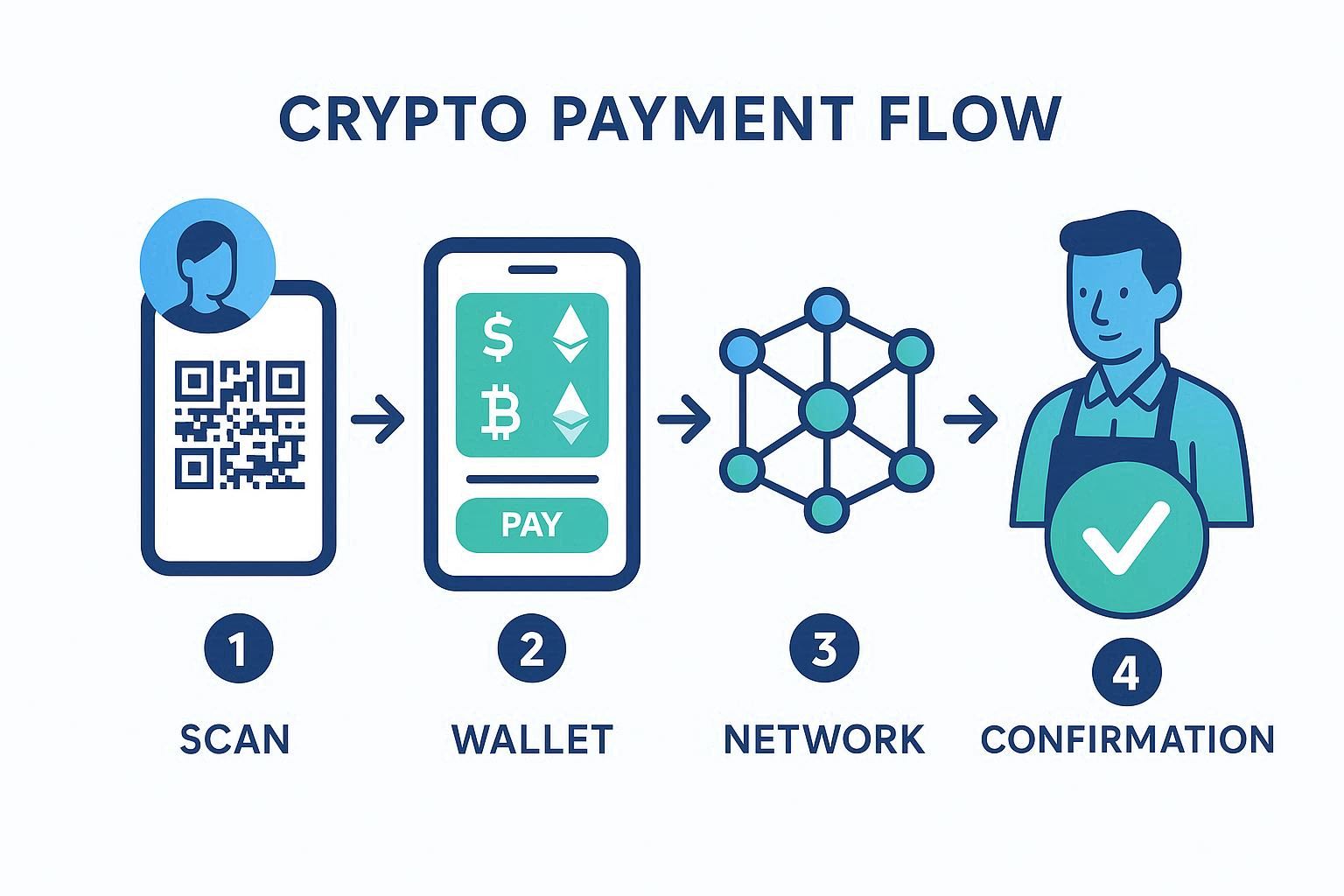
When you pay with cryptocurrency today, the process is surprisingly straightforward. You scan a QR code or click a payment button, select your preferred digital currency from your wallet, and confirm the transaction. The payment gateway verifies the transaction on the blockchain network, handles any necessary currency conversions, and credits the merchant’s account—often within minutes rather than days.
The beauty lies in the seamless user experience. Many solutions now offer instant settlements through off-chain processing, while still maintaining the security benefits of blockchain technology for final transaction recording.
Benefits of Using Crypto Payments for Consumers and Businesses
For Everyday Consumers
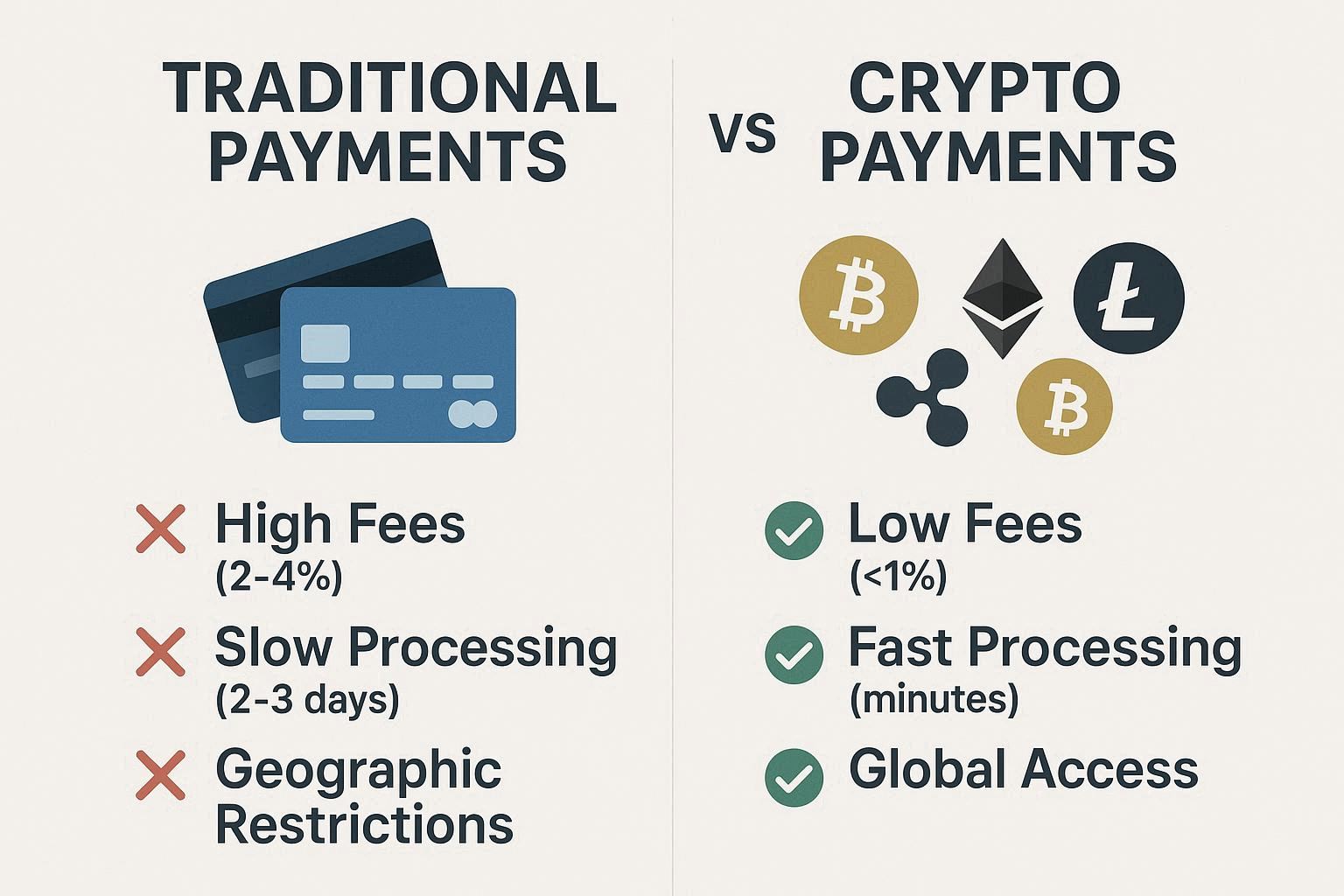
Lower transaction fees represent one of the most compelling advantages of crypto payments. Traditional credit card transactions typically cost merchants 2-4% in processing fees, costs often passed to consumers through higher prices. Crypto transactions, especially those using stablecoins, can reduce these fees to under 1%, creating savings that benefit everyone involved.
Cross-border payments showcase crypto’s revolutionary potential. Sending money internationally through traditional banking systems can take 3-7 business days and cost $15-50 in fees. Crypto payments complete the same transaction in minutes for a fraction of the cost, making it ideal for freelancers receiving payments from global clients or families sending remittances across borders.
Privacy and security features appeal to consumers increasingly concerned about data protection. While not completely anonymous, crypto transactions provide more privacy than traditional payments that require sharing extensive personal information with multiple intermediaries.
For Businesses and Merchants
Reduced chargeback fraud offers significant relief for merchants tired of dealing with disputed transactions. Crypto payments are irreversible once confirmed on the blockchain, eliminating the costly chargeback process that affects millions of online businesses annually.
Faster settlement times improve cash flow dramatically. Instead of waiting 2-3 business days for credit card payments to clear, merchants can receive crypto payments within minutes or hours, helping smaller businesses manage their working capital more effectively.
Global market access expands customer bases without the complexity of international banking relationships. A small online retailer can instantly accept payments from customers worldwide without establishing merchant accounts in different countries or dealing with currency exchange complexities.
Crypto Cards vs Traditional Cards Feature
| Feature | Crypto Cards | Traditional Cards |
| Underlying Currency | Backed by cryptocurrencies (e.g. BTC, ETH, stablecoins) | Backed by fiat currencies (e.g. USD, EUR, GBP) |
| Spending Process | Converts crypto to fiat at transaction time | Directly uses fiat currency from bank account or credit line |
| Transaction Speed | Fast, especially for cross-border payments | Near-instant for local, international may take days |
| Global Accessibility | Usable worldwide even in underbanked areas with crypto access | Requires bank account and credit history |
| Volatility Exposure | Exposed to crypto market volatility; stablecoins reduce this risk | Stable purchasing power with fiat currencies |
| Fees | Conversion fees, loading fees, ATM withdrawal fees | Annual fees, foreign exchange fees, ATM withdrawal fees |
| Rewards and Benefits | Crypto cashback and rewards in digital assets | Cashback, loyalty points, travel miles |
| Security Features | May include advanced security like 2FA, card freezing | Standard fraud protection, chargebacks |
| Privacy | Some cards offer more privacy; transactions not always linked to personal bank details | Transactions linked to bank account and regulated |
| Regulatory Oversight | Varies by region, generally less strict than traditional cards | Highly regulated with strict KYC and AML policies |
| Best Use Case | Ideal for crypto holders spending digital assets | Everyday purchases, credit building, broad merchant acceptance |
Popular Crypto Payment Gateways and Services in 2025
The crypto payment infrastructure has matured considerably, with several providers leading the market through reliability and merchant-friendly features.
Coinbase Commerce continues dominating the space with its user-friendly interface and integration with major e-commerce platforms like Shopify and WooCommerce. Their solution allows merchants to accept Bitcoin, Ethereum, Litecoin, and other major cryptocurrencies while providing detailed analytics and automated tax reporting.
BitPay has evolved from a Bitcoin-focused processor to a comprehensive crypto payment solution supporting over 30 cryptocurrencies. Their crypto debit cards bridge the gap between digital assets and everyday spending, allowing users to pay at traditional merchants using their crypto balances.
PayPal’s crypto integration brought mainstream legitimacy to crypto payments, allowing millions of users to pay with Bitcoin, Ethereum, Bitcoin Cash, and Litecoin at thousands of online merchants. This integration alone has driven significant adoption among previously crypto-hesitant consumers.
Emerging Players Making Waves
Newer entrants like Strike focus on Lightning Network payments for near-instant Bitcoin transactions, while Request Network provides crypto invoicing solutions for B2B transactions. These specialized providers are carving out niches by solving specific payment challenges that traditional gateways haven’t addressed.
How Stablecoins Enhance Everyday Crypto Transactions
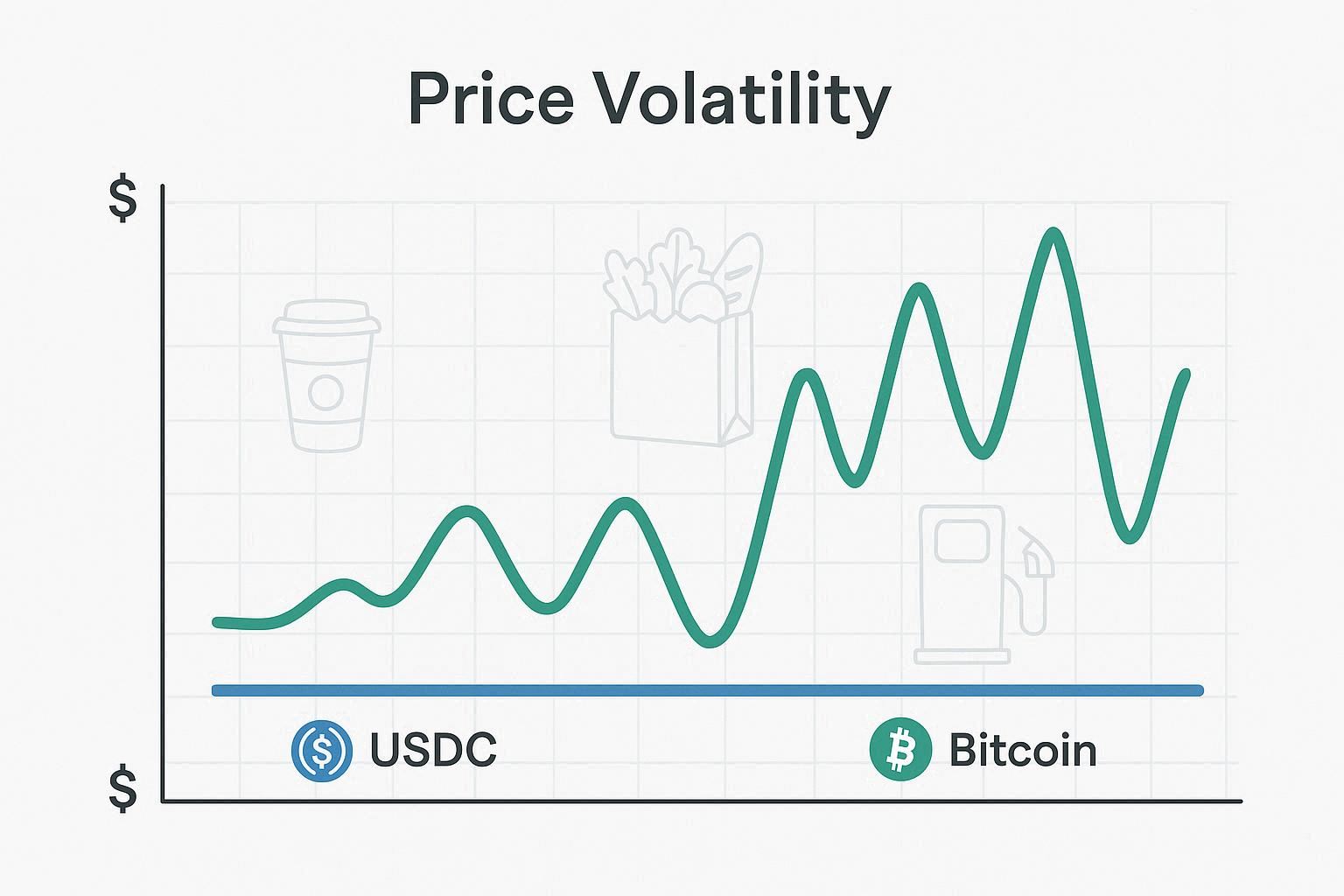
Stablecoins have emerged as the secret weapon for practical crypto payments, solving the volatility problem that previously limited cryptocurrency’s utility for everyday transactions. Regulatory clarity has improved significantly, with 88% of North American respondents viewing upcoming stablecoin regulations favorably.
USDC and USDT dominate the stablecoin payment landscape, offering dollar-pegged stability that makes them ideal for commerce. When you pay with USDC, you know that $100 today will still equal $100 tomorrow, eliminating the pricing uncertainty that plagued early crypto payments.
Programmable payments represent stablecoins’ most exciting feature for business applications. Smart contracts can automatically release payments when certain conditions are met—imagine rent that pays itself on the first of each month or freelance payments that release automatically upon project completion.
Real-World Stablecoin Adoption
Major corporations now use stablecoins for treasury management and international settlements. Companies like Tesla and MicroStrategy have experimented with crypto payments for their products, while traditional payment companies integrate stablecoin rails for faster, cheaper cross-border transactions.
The speed advantage is remarkable: traditional international wire transfers can take up to a week and cost significant fees, while stablecoin transfers complete in minutes for pennies. This efficiency particularly benefits e-commerce merchants dealing with global customers and remittance services serving immigrant communities.
Real-World Use Cases: E-commerce, Travel, Charities, and More
-
E-commerce Revolution
Online retailers are leading crypto payment adoption, driven by reduced fees and expanded customer bases. Overstock.com was among the pioneers, accepting Bitcoin since 2014 and reporting millions in crypto sales. Today, platforms like Newegg, AT&T, and Microsoft accept various cryptocurrencies for their products and services.
The subscription economy particularly benefits from crypto payments. Services like Spotify Premium and Netflix could theoretically accept crypto subscriptions that automatically renew through smart contracts, eliminating failed payment issues and reducing customer churn.
-
Travel Industry Transformation
The travel sector has embraced crypto payments for their borderless nature. Expedia, Destinia, and CheapAir accept Bitcoin for flight bookings, while boutique hotels worldwide offer crypto payment options to attract tech-savvy travelers.
Travel rewards programs are experimenting with blockchain-based loyalty tokens, allowing customers to earn cryptocurrency rewards for their travel spending and use those tokens for future bookings or upgrades.
-
Charitable Giving Gets Crypto
Non-profit organizations have discovered crypto’s potential for transparent, efficient fundraising. Donors can contribute directly to causes they care about while tracking how their donations are used through blockchain transparency. The Ukraine crisis demonstrated crypto’s power for humanitarian aid, with millions raised through direct cryptocurrency donations.
Disaster relief efforts benefit from crypto’s speed and accessibility. When traditional banking infrastructure fails during natural disasters, crypto payments can continue operating, enabling rapid fund distribution to affected communities.

Challenges Facing Crypto Payments and How They’re Being Solved
Despite impressive growth, crypto payments still face significant obstacles that the industry is actively addressing.
-
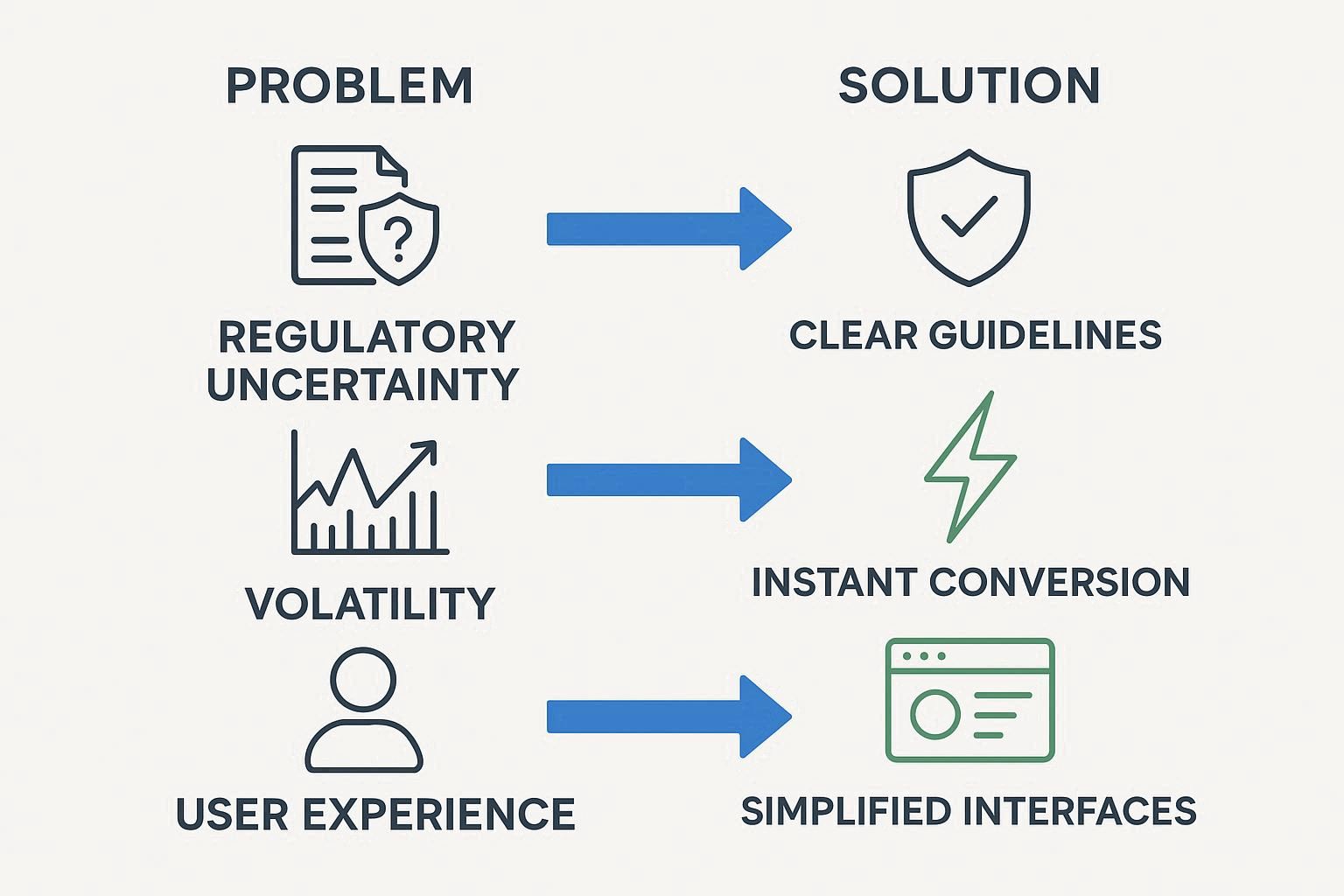
Regulatory Uncertainty and Solutions
Regulatory clarity remains the biggest challenge for widespread adoption. However, 2025 has brought significant progress with clearer guidelines from major financial regulators. The EU’s Markets in Crypto-Assets (MiCA) regulation and similar frameworks in other jurisdictions are providing the legal certainty that both merchants and consumers need.
Compliance solutions have emerged to help businesses navigate regulatory requirements. Companies like Chainalysis and Elliptic provide transaction monitoring and compliance tools that ensure crypto payments meet anti-money laundering (AML) and know-your-customer (KYC) requirements.
-
Volatility Mitigation Strategies
Price volatility historically deterred merchants from accepting crypto payments, but modern solutions effectively address this concern. Instant conversion services allow merchants to receive fiat currency immediately upon crypto payment, eliminating exposure to price fluctuations.
Hedging tools and derivative products enable businesses that want to hold cryptocurrency to manage their price risk through sophisticated financial instruments previously available only to large institutions.
-
User Experience Improvements
Early crypto payments required technical expertise that limited mainstream adoption. Today’s solutions prioritize user experience with one-click payments, mobile-optimized interfaces, and automatic wallet integration that makes paying with crypto as simple as using Apple Pay or Google Pay.
Educational initiatives by payment processors help merchants and consumers understand crypto payment benefits and processes. This education is crucial for overcoming the intimidation factor that still affects many potential users.
Future Outlook for Crypto Payments in Everyday Life
The trajectory for crypto payments points toward mainstream integration rather than replacement of traditional systems. Blockchain technology is expected to enhance speed, security and efficiency, especially for B2B and commercial payments, while global cash usage is anticipated to drop by 40% this year alone.
Integration with Traditional Finance
Central Bank Digital Currencies (CBDCs) represent the convergence of traditional and crypto payment systems. As governments launch digital versions of their national currencies, the infrastructure and user familiarity with crypto payments will accelerate adoption of all digital payment methods.
Bank partnerships with crypto payment providers are increasing. Traditional financial institutions are integrating crypto capabilities rather than competing against them, recognizing that customers want optionality in their payment methods.
Technological Advancements
Layer 2 solutions like the Lightning Network for Bitcoin and various scaling solutions for Ethereum are making crypto payments faster and cheaper. These improvements address the primary technical barriers that previously limited crypto payment viability.
Interoperability protocols will enable seamless payments across different blockchain networks, allowing users to pay with any cryptocurrency regardless of which network the merchant prefers. This flexibility will be crucial for mass adoption.
Predictions for 2026 and Beyond
The cryptocurrency payment apps market is projected to reach $2.4 billion by 2033, growing at a CAGR of 17.8%, indicating sustained growth beyond current adoption rates. We can expect to see crypto payment options become as common as credit card acceptance at both online and physical merchants.
Smart contract automation will enable new payment experiences, such as rent that pays itself, subscription services that automatically adjust pricing based on usage, and loyalty programs that instantly reward customers with cryptocurrency tokens.

Getting Started with Crypto Payments
For Consumers
Starting with crypto payments is easier than ever. Popular crypto wallets like MetaMask, Coinbase Wallet, and Trust Wallet provide user-friendly interfaces for storing and spending digital currencies. Many wallets now offer debit card integration, allowing you to spend cryptocurrency at traditional merchants through Visa or Mastercard networks.
Begin by setting up a wallet, purchasing small amounts of stablecoins like USDC for everyday transactions, and trying crypto payments with merchants you trust. Start small to build confidence with the technology before making larger purchases.
For Merchants
Businesses can integrate crypto payments through established providers like Coinbase Commerce, BitPay, or BTCPay Server for more technical implementations. Most solutions offer plugin integration with popular e-commerce platforms, making setup as simple as installing a WordPress plugin.
Consider starting by accepting stablecoins to minimize volatility risk, and ensure your accounting systems can handle crypto transactions for tax reporting purposes. Many payment processors provide tools to simplify this process.
Frequently Asked Questions About Crypto Payment Solutions
Are crypto payments safe for everyday use?
Modern crypto payment solutions implement robust security measures including multi-signature wallets, encryption protocols, and fraud monitoring that match or exceed traditional payment security standards. The blockchain’s immutable record-keeping actually provides superior transaction transparency and auditability.
How do taxes work with crypto payments?
In most jurisdictions, crypto payments are treated as property transactions for tax purposes, requiring calculation of capital gains or losses. However, many payment processors now provide automated tax reporting tools that handle these calculations, making compliance significantly easier for both merchants and consumers.
What happens if I make a mistake with a crypto payment?
While crypto transactions are irreversible once confirmed on the blockchain, most payment processors offer customer service to help resolve legitimate disputes. Some solutions also implement multi-signature requirements or time delays for large transactions, providing additional protection against errors.
Do I need technical knowledge to use crypto payments?
Today’s crypto payment solutions are designed for mainstream users with no technical background required. The user experience resembles traditional online payments, with the underlying blockchain complexity hidden behind intuitive interfaces.
Which cryptocurrencies should I accept or use for payments?
Stablecoins like USDC and USDT offer the most practical option for everyday transactions due to their price stability. Bitcoin remains popular for its recognition and liquidity, while Ethereum provides access to smart contract functionality for more complex payment scenarios.
The transformation of crypto payments from experimental technology to practical financial tools represents one of the most significant developments in digital commerce. As regulatory clarity improves and technology advances, we’re witnessing the emergence of a truly global, efficient payment system that benefits both consumers and merchants.
The question isn’t whether crypto payments will become mainstream—that process is already well underway. Instead, the focus should be on how quickly traditional payment infrastructure will adapt to compete with the speed, cost-efficiency, and innovation that crypto payment solutions provide.
Whether you’re a consumer looking for better payment options or a merchant seeking to reduce costs and expand your customer base, crypto payment solutions offer compelling advantages that are only going to become more pronounced as the technology matures. The future of payments is digital, decentralized, and undeniably here.
Stay informed with daily updates from Blockchain Magazine on Google News. Click here to follow us and mark as favorite: [Blockchain Magazine on Google News].
Disclaimer
Blockchain Magazine publishes content submitted by third-party agencies, partners, and clients. Any such posts are categorized and tagged accordingly:
- Sponsored Content: Posts labeled as "Sponsored" are paid placements submitted by third-party agencies or clients. Blockchain Magazine does not endorse or express any views regarding the information contained in these posts. The opinions expressed belong solely to the respective authors and do not reflect the official policy or position of Blockchain Magazine.
- Press Releases: Posts labeled as "Press Release" are paid PR submissions provided by our partners and clients. These are published as received and should be considered as promotional content.
The information provided in such posts is strictly for informational purposes only and should not be interpreted as financial, investment, or professional advice. Blockchain Magazine does not recommend, endorse, or promote any specific products, services, or companies mentioned. Readers are strongly encouraged to conduct independent research and consult with a qualified professional before making any financial or investment decisions.
Additionally, all featured images accompanying such posts are intended as creative depictions of the subject matter. There is no intent to offend or misrepresent any individual, institution, or entity. If any content or imagery is found to be objectionable, please reach out to us at [email protected], and we will promptly review the concern.
About the Author: Editor's Desk





Get Blockchain Insights In Inbox
Stay ahead of the curve with expert analysis and market updates.